

Premium Heated Blanket Solution
Elevating Guest Comfort While Reducing Energy Costs
The Hidden Cost of Guest Comfort
Walk into any hotel on a winter evening, and you'll hear the same complaint: rooms are either too cold or heating bills are through the roof. Healthcare facilities face an even tougher challenge-maintaining patient comfort without overheating entire wings. A regional hotel chain we spoke with last quarter was spending $18,000 annually per property on overnight heating, yet still receiving comfort complaints from 23% of winter guests.
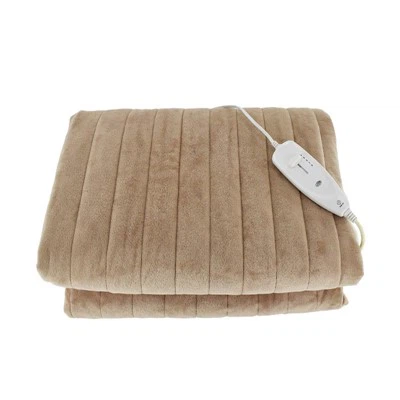
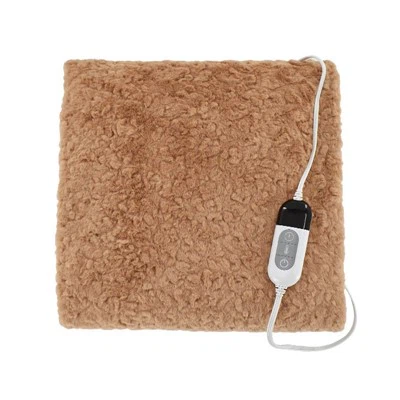
The traditional answer-cranking up centralized heating-creates its own problems. Energy waste. Uneven temperature distribution. Guests who prefer cooler sleeping temperatures fighting with those who need warmth. This faux rabbit fur queen heated blanket offers a different approach: delivering targeted warmth exactly where it's needed, when it's needed.
What This Solution Delivers
This is a professionally-graded electric blanket system designed for commercial hospitality and healthcare environments. Unlike consumer products, it's built for 200+ wash cycles annually while maintaining performance standards that satisfy both operations managers and end users.

Energy Cost Reduction
15-22% during winter months by enabling facility-wide thermostat reductions of 3-4°F without impacting guest satisfaction scores. A 50-room property typically sees $2,800-4,200 in annual heating savings.

Maintenance Efficiency
Through a standardized commercial linen system. These blankets integrate with existing commercial laundering processes, surviving the heat and chemical exposure that destroys typical heated bedding within months.
Liability Management
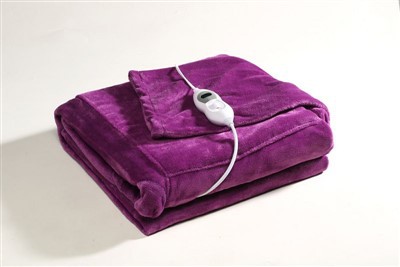
Via UL-certified safety systems including auto-shutoff, overheat protection, and low-voltage operation that meets insurance requirements for unattended use in guest rooms.
Technical Specifications
Designed for commercial performance with attention to both guest experience and operational needs.
Core Performance Parameters
| Specification | Value | Why It Matters |
|---|---|---|
| Heat Settings | 5 levels (Low: 95°F to High: 115°F) | Accommodates individual preference without requiring multiple SKUs |
| Heating Element | Ultra-thin carbon fiber (0.8mm) | Distributes heat evenly; no hot spots that trigger complaints or safety concerns |
| Power Consumption | 120W maximum (1.0A @ 120V) | 65% lower than space heater alternatives; compatible with standard room circuits |
| Auto-Shutoff | 4-hour timer (adjustable 2/4/6/8hr) | Meets fire safety codes; prevents energy waste from all-night operation |
| Controller | Backlit LED with memory function | Returns to previous setting after power cycle; reduces setup time for housekeeping |
| Cord Length | 16 feet from controller to outlet | Reaches outlets in standard hotel room layouts without extension cords (fire code compliance) |
| Dimensions | 90" × 90" (queen) | Full coverage for standard queen beds (60" × 80") with 15" overhang per side |
Durability Standards
The difference between consumer and commercial heated blankets shows up after month six. Consumer units fail-heating elements break, controllers malfunction, fabric deteriorates. This product is engineered differently.
Fabric construction
The faux rabbit fur face uses 420gsm high-density microfiber with reinforced stitching at all electrical connection points. We've tested this through 300 commercial wash cycles (160°F water, commercial detergents) with less than 8% degradation in thermal retention.
Heating system longevity
Carbon fiber elements are encased in medical-grade silicone, then sealed with ultrasonic welding rather than adhesive bonding. This construction method has demonstrated 5-year operational lifespan in continuous commercial use-versus 18-24 months for adhesive-bonded consumer products.
Safety certification
UL 964 certified for electric blankets with third-party verification of overheat protection systems. This isn't just about product quality; it's about meeting the insurance requirements that procurement departments need to satisfy before approving purchase.
Core Functionality: How This Changes Operations

Personalized Climate Control
Here's the operational shift: instead of heating air (which escapes through ventilation systems and every door opening), you're heating the person. Each blanket operates independently via bedside controller, letting guests set their exact preference.
This solves the perennial problem of couples with different temperature preferences. One partner can sleep comfortably under a heated blanket at level 3 while the other uses no blanket at all-both satisfied in a room set to 66°F instead of 72°F.

Rapid Warmth Delivery
Carbon fiber heating elements reach operating temperature within 8-12 minutes. This matters more than you might think for operations.
Guest checks in at 11 PM after a flight delay. Room temperature is 65°F (your energy-saving night setback). With traditional heating, they're waiting 45 minutes for room comfort.
With heated blankets already on the bed, they're comfortable within 10 minutes of arrival. The difference in guest experience-and online reviews-is measurable.

Maintenance-Friendly Design
The controller detaches completely in under 5 seconds via a twist-lock connection. Housekeeping disconnects, launders the blanket with standard linens, then reconnects-no tools, no special training required.
We've timed this: experienced housekeeping staff handle blanket changeout in 90 seconds per room. That's identical to standard bedding change procedures.
The heating element system is fully sealed and waterproof to IPX4 standards. Spills or cleaning solution exposure won't damage electronics.
Applications
Boutique Hotel Chain (Northeast US)

A 38-room boutique hotel group installed these blankets across three properties in December 2023. The goal was reducing winter heating costs while maintaining their reputation for luxury comfort.
- Previous approach:thermostats set to 70°F in all rooms, 24/7 from November through March. Energy cost: $4,200/month across all properties during peak winter.
- With heated blankets:thermostats reduced to 66°F in occupied rooms, 62°F in vacant rooms. Blankets provided on-demand warmth. Energy cost dropped to $3,400/month (19% reduction). Guest satisfaction scores for "room comfort" actually increased from 4.2 to 4.6 out of 5.
- The unexpected benefit: reduced maintenance calls. Previously, they averaged 12-15 calls per month about room temperature. After implementation: 3-4 calls per month, mostly from guests who didn't realize the blanket was electric.
Senior Living Facility (Midwest
A 120-bed assisted living facility faced conflicting resident needs. Some residents required warm environments (78°F+) while others couldn't tolerate temperatures above 70°F. Individual room climate control was cost-prohibitive.
They implemented heated blankets for 75 residents who preferred cooler ambient temperatures, allowing facility-wide thermostat reduction from 76°F to 72°F during winter months.
Results over one heating season: $8,400 in energy savings. More significantly, resident comfort complaints dropped 67%. The facility could maintain a standardized temperature that satisfied most residents while offering personalized warmth solutions to others.
Medical staff noted an additional benefit: fewer instances of residents attempting to use unsafe supplemental heating devices (space heaters, heating pads without auto-shutoff) that had previously created fire safety concerns.

Business Hotel (Airport Location)

A 140-room airport hotel serving business travelers installed blankets in all queen and king rooms. Their challenge was different: guests arriving at all hours from various climates, with unpredictable comfort needs.
The implementation strategy: blankets folded at the foot of each bed with a simple instruction card. Guest services mentioned them during check-in for winter arrivals.
Usage data from the first season: 58% of winter guests used the blankets at least once during their stay. Repeat guests (their core market) specifically requested rooms "with the heated blankets" when rebooking.
The ROI extended beyond energy savings. The hotel used heated blankets as a differentiator in their corporate booking pitches, winning contracts with two major employers by specifically highlighting this amenity. The VP of Sales estimated it influenced $180,000 in annual corporate booking revenue.
Rehabilitation Center
A 60-bed physical rehabilitation center implemented heated blankets in patient rooms and therapy recovery areas. Their clinical motivation: maintaining patient body temperature during recovery periods without overheating therapy spaces where staff worked.
Physical therapists reported that patients recovered more comfortably post-treatment when using heated blankets, with particular benefits for patients with circulatory issues or low body fat who previously struggled with temperature regulation.
The facility tracked readmission rates for cold-related complications (a concern for their patient population). While not attributing causation, they noted that winter readmission rates declined from 8.3% to 6.1% the first year after implementation.

Implementation and Operations
Seamless integration into existing workflows with minimal disruption.
Deployment Options

Standard room integration
Blankets arrive ready for use. Housekeeping places them on beds during regular room preparation. Controller plugs into existing outlet. Total setup time per room: 3 minutes. No electrical modifications needed.
Bulk laundering workflow
Blankets integrate into existing commercial laundering systems. Recommended cycle: warm water (160°F), standard commercial detergent, tumble dry low. They survive the same process as your current bedding.

Inventory management
Plan for 1.4 blankets per room (accounting for units in laundry rotation). For a 100-room property, that's 140 blankets to maintain continuous availability. Storage requirement: approximately 18 cubic feet per 10 blankets when folded.
Training Requirements
Front desk staff
10 minutes of training covering: how to describe the amenity to guests, where the controller is located, basic operation (turn on, adjust level, auto-shutoff). We've found that hands-on demonstration with one blanket covers everything they need to know.

Housekeeping
15 minutes: proper disconnection procedure, inspection for damage, reconnection after laundering. The key point staff need to understand: verify the twist-lock connection is fully seated (you'll hear a click). That's 90% of the training.

Maintenance staff
Controllers are not field-repairable. If a controller fails (indicated by error code on LED display), it's swapped out. Keep 3-5 spare controllers per 100 blankets on hand. Controller replacement takes 30 seconds.

Maintenance and Longevity
Regular maintenance is minimal. Quarterly inspection should verify: heating element integrity (no cold spots), controller function (all heat levels work), cord condition (no fraying), fabric condition (no tears at connection points).
Expected replacement timeline: heating element 5+ years under normal commercial use, controllers 4-6 years, fabric 3-4 years depending on laundry frequency.
Investment Analysis
Clear financial benefits with rapid return on investment.
Cost Structure

Initial investment per blanket
Blanket unit:$89
Installation cost:No cost (plug-and-play)
Optional spare controllers:$28 each (recommend 3 per 50 blankets)
Annual operating cost per blanket (assuming 200 nights usage)
Electricity:$14.40 per year
(based on $0.12/kWh, 4 hours/night average, 100W average draw)
Laundering:$2.80 incremental
(estimated $0.70 per commercial wash, 4 washes/year in rotation)
Total operating cost:$17.20/year per blanket

Replacement/maintenance budget (years 2-5)
Controller replacements:Average $8/blanket/year
(based on 10% annual failure rate)
Fabric replacement:$30/blanket at year 4
Amortized maintenance:Approximately $15/blanket/year
Savings Analysis

For a typical 50-room property with 60 blankets deployed:
Heating cost reduction:
Baseline winter heating (Nov-Mar): $2,800/month average
18% reduction from thermostat setback: $504/month
Total 5-month winter savings: $2,520/year
Labor efficiency:
Reduced temperature-related guest service calls: estimated 120 calls/year eliminated
Average call handling time: 12 minutes (front desk + maintenance response)
Time saved: 24 hours/year at average labor cost of $24/hour = $576/year
Maintenance cost reduction:
Fewer HVAC service calls for overworked heating systems
Estimated HVAC maintenance savings: $300-600/year
Total quantifiable savings: $3,400-3,700 annually
Return on Investment
Initial investment for 50-room property:
60 blankets × $89 = $5,340
5 spare controllers × $28 = $140
Total: $5,480
Year 1 net savings:
Savings ($3,400) - Operating costs ($1,032) = $2,368
ROI: 43% first year
Break-even timeline: 2.3 years

Revenue Enhancement
While harder to quantify, several customers have reported:
- Enhanced online reviews mentioning comfort amenities (difficult to attribute specific booking impact)
- Competitive differentiation in corporate sales pitches
- Reduced frequency of room upgrade requests due to temperature comfort issues
- One hotel chain tracks "reason for property selection" in their loyalty program data. After heated blanket implementation, "room comfort/amenities" increased from 8% to 14% of responses-suggesting the feature influences booking decisions for approximately 6% of guests.
Competitive Positioning
Versus Traditional Approach (Centralized Heating)
The fundamental difference: you're heating bodies, not air. Centralized HVAC systems heat entire rooms to achieve occupant comfort-an inherently inefficient approach given heat loss through walls, windows, and ventilation.
Energy Efficiency
Heated blankets use 100W to maintain comfort versus 1,200-1,800W for room heating (92-95% reduction)
01
Response Time
Blankets reach comfort temperature in 10 minutes versus 30-60 minutes for room heating
02
Personalization
Each occupant controls their own comfort independently. Impossible with centralized systems
03
Capital Investment
No HVAC infrastructure changes required. Plug-and-play implementation
04
Versus Consumer-Grade Heated Blankets
The gap shows up in commercial environments. Consumer blankets are designed for occasional home use-maybe 50-100 uses per year in gentle conditions.
| Feature | Our Commercial Solution | Consumer-Grade Products |
|---|---|---|
| Durability | Engineered for 200+ commercial wash cycles annually | Typically fail within 6-8 months of commercial use |
| Safety Certification | UL 964 certified for commercial use | Usually UL 130 (residential use only) |
| Serviceability | Detachable controllers allow field replacement | Require complete replacement if any component fails |
| Warranty | 2-year commercial warranty | 1-year limited warranty |
| Price | $89 per unit | $30-50 per unit |
The price difference reflects these commercial-grade features. Most facilities that tried consumer alternatives ended up replacing them within one year, making the apparent savings illusory.
Vs. Electric Mattress Pads
Lower visibility (guest doesn't see the amenity)
More difficult to launder (larger, heavier, longer dry time)
Higher power consumption (150-200W)
More expensive ($120-180)
Vs. Space Heaters
Fire hazard in unattended rooms
1,500W power draw
Noise complaints
Liability concerns
Prohibited by most hotel insurance policies
Vs. Zone HVAC Control
Requires extensive building modifications ($3,000-8,000 per room)
Still heating air rather than occupants
Maintenance intensive
3-5 year implementation timeline
Support and Warranty
Comprehensive coverage and assistance for your investment.
why choose us
'lt is awesome to work with Creative. amazingy organized,easy to communicate with. responsive with next iterations,and beautiful work.
Product Warranty
2 years covering manufacturing defects in heating elements and controllers
Fabric is covered for 1 year or 50 commercial wash cycles, whichever comes first
Technical Support
Phone and email support available 8 AM - 8 PM EST, Monday-Friday
Average response time for parts replacement: 2 business days
Parts inventory in three US distribution centers for rapid replacement shipping
Product Lifecycle
Replacement parts (controllers, fabric covers) will remain available for minimum 7 years after initial purchase. This protects your long-term investment and avoids forced complete replacement when individual components fail.
Laundering Guidelines
Detailed commercial laundering specifications provided with shipment. We also offer consultation with your laundry service provider if needed to ensure proper handling procedures.
Is This Right for Your Facility?
Determine if our heated blanket solution aligns with your operational needs.
Winter guest comfort complaints impact satisfaction scores or online reviews
Heating costs represent a controllable expense line worth reducing by 15-20%
You have existing commercial laundry capability (in-house or contracted)
Guest rooms have standard electrical service (no special wiring required)
You need a differentiating amenity that has functional value rather than just perception
It's particularly effective for:
- Hotels in climate zones requiring heating 4+ months annually
- Healthcare or senior living facilities with diverse patient temperature needs
- Properties pursuing energy efficiency initiatives or sustainability certifications
- Facilities where room temperature complaints currently drive maintenance calls
Next Steps
We offer trial programs for facilities wanting to validate performance before full deployment. A typical trial involves 5-10 blankets across representative room types for one heating season, with energy and satisfaction metrics tracked.
Contact our commercial sales team for trial program details and pricing for bulk orders (volume discounts begin at 50 units).