
As cold winters sweep across North America and Europe, heated blankets have become a must-have household item for staying warm and improving sleep quality. Whether you are an ordinary household user looking for a cozy night's sleep, a renter with limited socket layouts, or a bulk buyer sourcing compliant home goods, heated blanket safety is always the top concern. Many users wonder: is heated blanket safe to use all night? Can you plug an electric blanket into a power strip? What hidden risks come with long-term use?
This all-in-one guide covers core safety hazards, scene-based usage rules, exclusive tips for different crowds, certified purchasing standards, daily maintenance methods, and emergency handling for faults. You will get practical, actionable advice to avoid safety accidents and pick reliable heated blankets with ease.
1. Are Heated Blankets Safe? Core Safety Risks You Need to Know
Heated blankets bring warmth, but improper use or low-quality products may lead to potential safety hazards. Understanding core risks first helps you use them in a more standardized way.
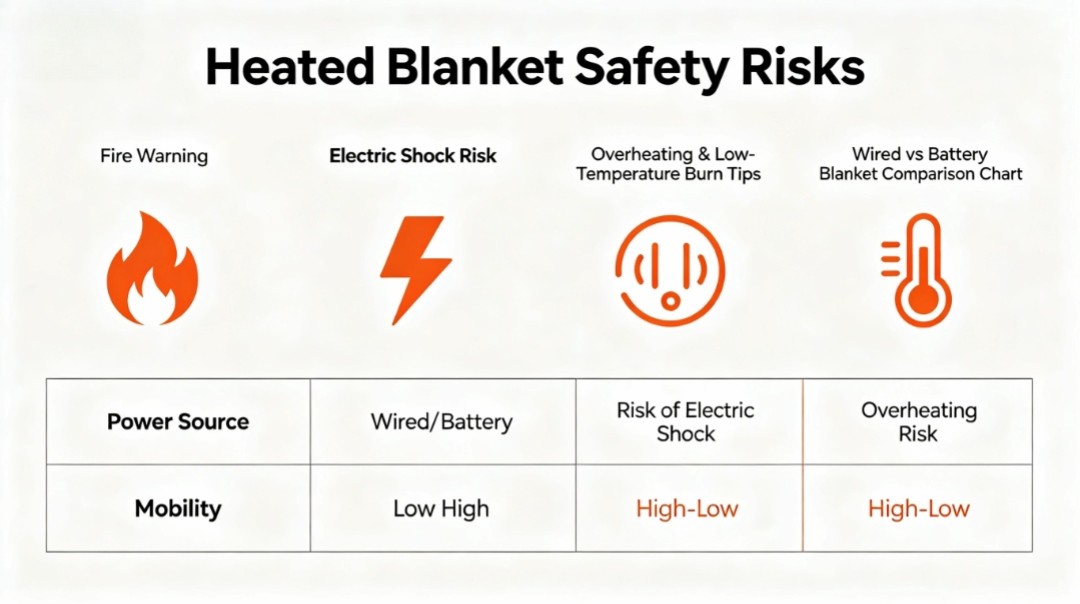
1.1 Common Fire & Electric Shock Hazards
Fire hazards and electric shock are the most direct dangers of electric heated blankets, mostly caused by irregular operation or aging equipment.
- Folding or squeezing the blanket for a long time will damage the internal heating wires, causing short circuits and sparks.
- Using the blanket with wet hands or placing it on damp bedding increases the risk of electric shock.
- Overloaded circuits will generate excessive heat, igniting surrounding fabrics and triggering fires.
- Old blankets with worn cords, exposed wires or damaged plugs greatly raise electric leakage risks.
1.2 Hidden Dangers: Overheating, Dehydration and Cold Burn
Most users only focus on visible fire risks but ignore invisible hidden health dangers.
- Overheating & dehydration: Long-term high-temperature use will raise body surface temperature, accelerate water loss, and cause dry mouth, fatigue and poor sleep quality overnight.
- Cold burn: Also known as low-temperature burn. Prolonged contact with a slightly high temperature will damage subcutaneous tissues unconsciously, which is common among users with insensitive skin perception.
- Continuous overheating may also cause physical discomfort such as dizziness and palpitations, especially for vulnerable groups.
1.3 Difference Between Wired and Battery Heated Blanket Safety
Wired and battery heated blankets are the two mainstream types on the market, with obvious differences in safety performance. The following table makes a clear comparison:
Comparison Dimension Wired Heated Blanket Battery Heated Blanket
Power Supply Stability Stable continuous power supply Limited battery life, needs frequent charging
Overload Risk Risk of circuit overload with improper socket use No mains overload risk
Continuous Usage Time Support all-night use Mostly 4–8 hours of continuous use
Applicable Scenarios Indoor fixed beds Camping, RV, outdoor travel
Hidden Safety Risks Wire aging, pulling damage Battery overheating during charging
In short, wired heated blankets are more suitable for long-term indoor use with standardized power supply, while battery heated blankets are more flexible for mobile scenarios, but need to pay attention to battery charging safety.
2. Scene-Based Safe Usage Rules
Different usage scenarios have different safety requirements. Below we answer high-frequency scene questions one by one to help you avoid misuse.
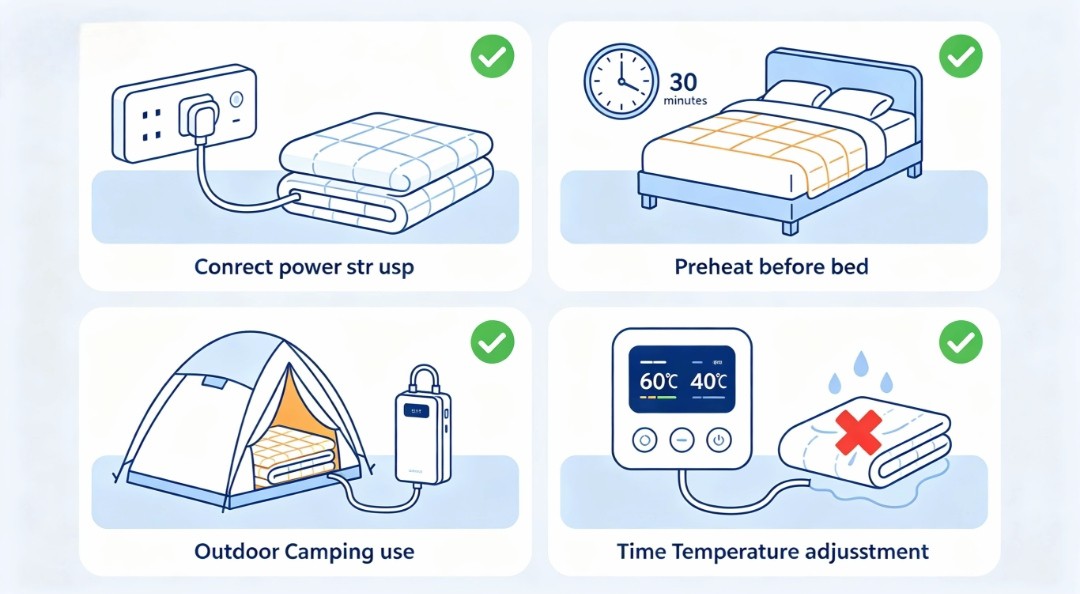
2.1 Can You Plug an Electric Blanket into a Power Strip?
It is allowed in short-term emergency use, but there are strict restrictions to avoid power overload.
- ❌ Forbidden: Daisy chain socket connection, connecting multiple high-power appliances to one power strip at the same time.
- ✅ Recommended: Use a qualified high-load power strip independently, do not share the socket with heaters, electric kettles and other high-power equipment.
- Do not use damaged, aging or unmarked power strips, which are prone to short circuits and leakage.
2.2 Is It Safe to Sleep With a Heated Blanket All Night?
It is not recommended to keep the heated blanket on high gear all night.
- The optimal way: Turn on the blanket to preheat the bed 30 minutes before going to bed, and turn it off or switch to low gear after falling asleep.
- Long-term all-night high-temperature use will increase the risk of dehydration and cold burn. Healthy adults can use low gear overnight properly, but vulnerable groups are prohibited.
2.3 Outdoor & Car Use: Voltage Adaptation Risks
Heated blankets used in RVs, camping or cross-border scenarios need to pay attention to voltage differences:
- Most European devices support 220–240V, while North American mainstream voltage is 110V. Mismatched voltage will cause equipment failure or even burnout.
- Car power banks have limited power. Do not use high-power wired heated blankets in the car for a long time.
- Avoid using heated blankets in rainy and humid outdoor environments to prevent water from penetrating the circuit.
2.4 Reasonable Setting of Temperature Gear and Timing Function
Reasonable temperature and timing settings can effectively reduce safety risks:
- Daytime use: Medium gear is enough to meet the warming demand.
- Night sleep: Priority to low gear, avoid long-term high-temperature baking.
- Make full use of the timing function, and set the automatic shutdown within 2–4 hours to avoid forgotten shutdown.
3. Suitable & Unsuitable Crowds: Exclusive Usage Guide
Different groups have different physical conditions, and the applicable rules of heated blankets vary greatly. Targeted avoidance can reduce hidden dangers.
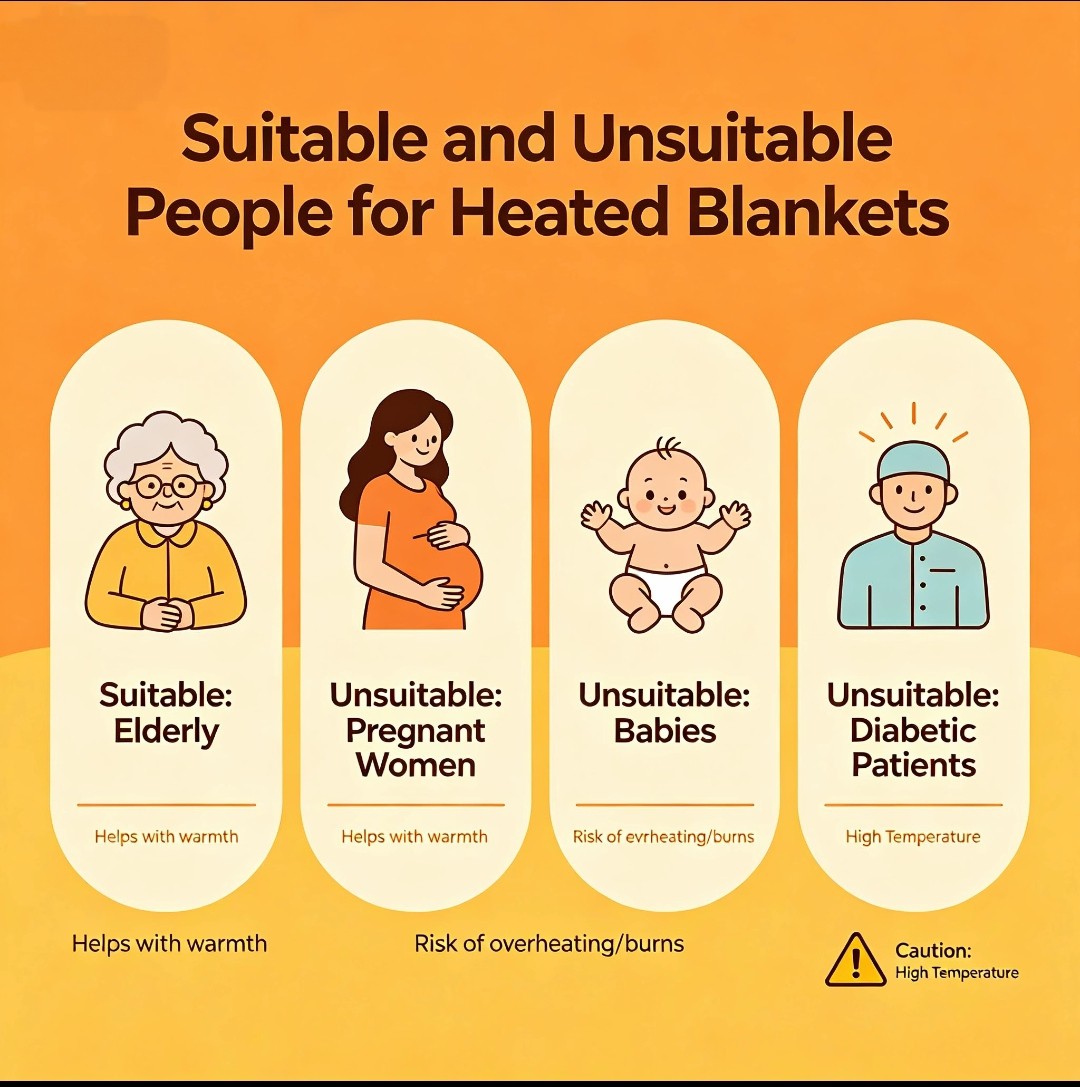
3.1 Elderly, Pregnant Women, Infants and Young Children Usage Taboos
- Elderly: Slow nerve response, unable to perceive cold burn in time. Prohibit all-night high-gear use, and it is better to be accompanied by family members when using.
- Pregnant women: Long-term high temperature may affect physical comfort. It is recommended to use preheating only and turn off the power before sleeping.
- Infants and young children: Young skin is delicate, and they cannot express discomfort actively. It is not recommended to use heated blankets directly.
3.2 Patients with Diabetes, Neuropathy and Mobility Impairment
Diabetic patients are prone to peripheral nerve lesions, with reduced limb perception, and cannot feel abnormal high temperature, which is the high-risk group of cold burns. Patients with neuropathy and mobility impairment cannot leave the dangerous environment independently once an accident occurs. It is recommended to abandon heated blankets and choose alternative warm quilts.
3.3 Healthy Adults: Recommended Usage Duration
For healthy adults with normal physical perception, the continuous use time should not exceed 8 hours. Regularly turn off the power to ventilate and dissipate heat, and check whether the wire is damaged before each use.
4. Safety Certification & How to Choose a Qualified Heated Blanket
For bulk purchasers and household users, choosing certified qualified products is the first line of safety defense.
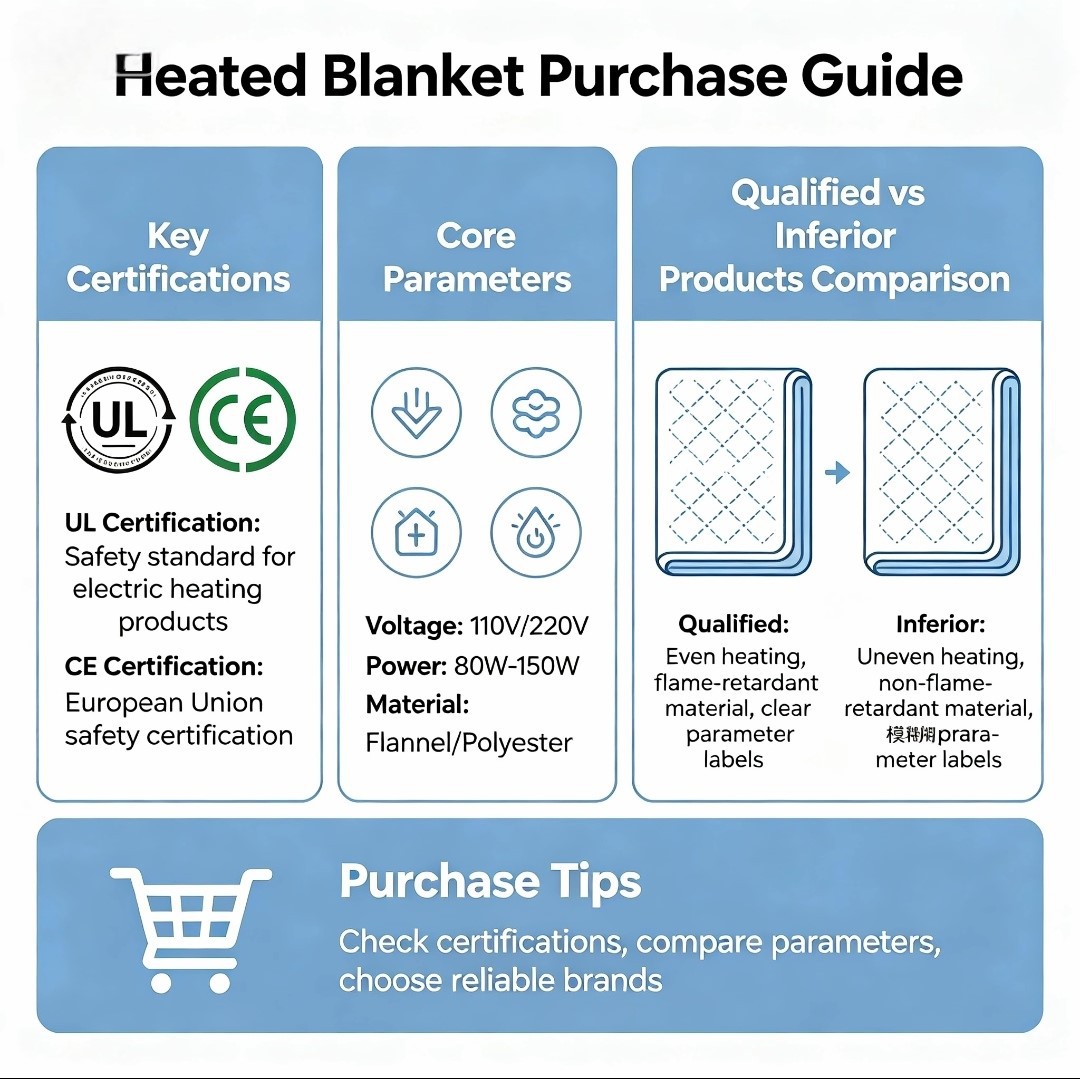
4.1 Introduction to UL, CE Mainstream Safety Certifications
- UL Certification: Mandatory mainstream certification for the North American market, covering electrical safety, fire resistance and material safety. Products without UL certification cannot be sold locally legally, and there are potential safety hazards.
- CE Certification: The basic compliance certification for the European market, indicating that the product meets EU health, safety and environmental protection standards.
When sourcing or purchasing, prioritize products with complete UL/CE marks to avoid customs clearance risks and safety accidents. You can check our compliance certification page to learn more about product standard details.
4.2 Key Parameters to Check Before Purchase (Power, Voltage, Material)
Focus on the following core parameters when selecting, you can refer to the checklist below:
1. Voltage: Match the local mains voltage to avoid voltage mismatch
2. Power: Household conventional power is between 100–200W, too high power increases circuit load
3. Material: Prefer flame-retardant, waterproof and skin-friendly fabrics
4. Wire thickness: Thickened internal wires are more durable and not easy to break
4.3 How to Identify Inferior Unsafe Heated Blankets
Inferior products are the main cause of safety accidents. You can quickly identify them through the following features:
- No complete UL/CE certification marks on the body and packaging
- Rough fabric, loose stitching and exposed internal wires
- F peculiar smell when heating for the first time and lasting for a long time
- Unclear parameter labels, unknown production information
It is recommended to choose reliable suppliers and formal brands. Browse our heated blanket product category page to view fully certified products.
5. Daily Maintenance, Cleaning and Storage Safety Norms
Correct maintenance can extend the service life of the heated blanket and reduce failure risks.

5.1 Can Heated Blankets Be Washed? Washing Precautions
Not all heated blankets support machine washing:
- Detachable wire models can be hand-washed or gently machine-washed after removing the controller.
- Non-detachable wire models are prohibited from soaking and washing to prevent water from entering the circuit.
- Do not wring, dry by high-temperature dryer or iron, and naturally dry in a ventilated place.
5.2 Correct Storage Methods to Avoid Circuit Damage
When not in use in warm seasons, standard storage can protect internal heating wires:
- Do not fold sharply or squeeze heavily, avoid long-term compression of heating wires.
- Store in a dry and ventilated environment, away from humid, high-temperature and direct sunlight places.
- Do not store together with sharp objects to prevent fabric and wire damage.
5.3 Service Life & Scrap Judgment Standards
Heated blankets have a limited service life, and long-term over-age use has great risks:
- The safe service life is generally 3–5 years.
- Scrap immediately if the following situations occur: wire aging and cracking, uneven heating, abnormal noise during use, peculiar burning smell, fabric damage and exposure of internal wires.
6. Emergency Handling Steps for Faults & Accidents
Master emergency handling methods to minimize losses when faults occur.

6.1 What to Do If Abnormal Heating Occurs
1. Cut off the power supply immediately and separate the blanket from the human body
2. Place it in a ventilated place to cool down naturally
3. Check for fabric bulging, wire damage and other phenomena
4. Do not use it again if abnormal heating occurs, and replace it directly
6.2 How to Deal with Circuit Short Circuit and Power Leakage
1. Keep hands dry and cut off the main power supply first, do not touch the equipment with wet hands
2. Stay away from the blanket to avoid electric shock
3. Do not disassemble the equipment privately, and contact professional maintenance personnel or replace it directly
6.3 Post-Accident Safety Inspection Methods
After troubleshooting the fault, inspect item by item before reuse:
- Check whether the power cord and plug are intact
- Confirm whether the heating area is uniform without local overheating
- Check the fabric for damage, water stains and mildew
- Unqualified inspection results are prohibited from reuse
7. Summary: How to Use Heated Blankets Safely in Daily Life
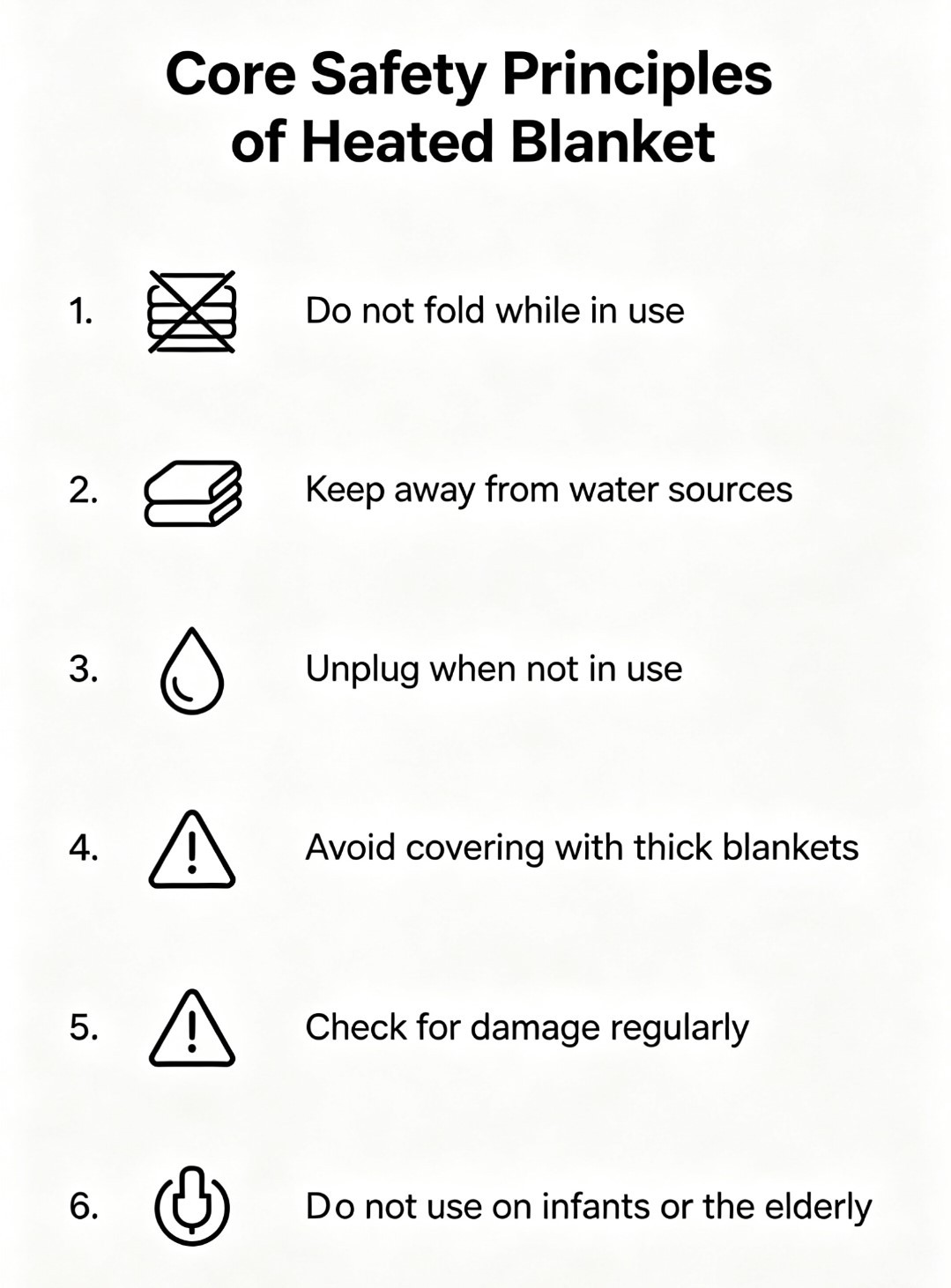
To sum up, safe use of heated blankets follows these core principles:
1. Prioritize UL/CE certified qualified products
2. Standardize socket use, avoid overload and daisy chain connection
3. Control usage time, avoid all-night high-temperature use
4. Special groups such as the elderly, pregnant women and diabetic patients use with caution or abandon use
5. Standardize cleaning and storage, eliminate over-age use
6. Master emergency handling methods to deal with faults in time
Whether you are a household user pursuing safe warmth or a bulk buyer focusing on compliant procurement, standardized use and scientific selection are the core. If you need to source high-quality certified heated blankets, you can contact our team to get customized procurement solutions.
FAQ

01. What temperature is the safest for overnight use of a heated blanket?
02.Can I wash a heated blanket directly in a washing machine?
03.Are battery heated blankets safer than wired ones?
04.Can diabetic patients use heated blankets?
05.Is it safe to use two heated blankets on one power strip at the same time?
06.Why does my heated blanket have a peculiar smell when heating?