

When you pick electric blankets for clinics, you need to think about safety certification and if they fit clinical needs. Blankets without certification can cause electrical dangers and hurt patients. Following rules like UL 964 and FDA 510(k) helps keep patients and staff safe. Putting safety first helps you follow laws and lowers the chance of expensive problems.
Medical-Grade Electric Blankets
Definition
Medical vs. Consumer
You might ask what makes these blankets right for hospitals. Medical-grade electric blankets have special safety features and strong materials. They use double insulation and a three-wire design. These blankets help protect patients who are more at risk, like kids and older people. Regular heated blankets for home are made for comfort. They do not have the strict safety checks needed in clinics. Medical blankets must meet higher rules to keep patients safe from electrical problems and getting too hot.
Regulatory Standards
It is important to see if electric blankets follow the right standards before using them in healthcare. Medical-grade blankets follow rules like UL 964 for safety and fire resistance. They also meet FDA 510(k) rules for medical devices. These rules make sure the blankets are tested for insulation, leaks, and temperature control. Hospitals and clinics trust these certifications to keep patients safe. You should always ask suppliers to show proof that their blankets meet these rules.
Clinical Applications
Surgery and Recovery
Electric blankets are very helpful in surgery and recovery rooms. They keep patients warm during and after surgery. Keeping body temperature steady helps stop hypothermia, infection, and pain. Blanket warmers can help patients get better faster and have fewer problems.
Emergency and Critical Care
In emergency and critical care, electric blankets help patients stay warm quickly. They help control body heat in ICUs and during trauma care. These blankets are very important for newborns, older adults, and people with long-term health problems.
Special Populations
Some groups, like children and seniors, need extra care. Medical-grade electric blankets give gentle heat and let you control the temperature. Nursing homes use queen and double-size blankets to keep people warm and help with stiff muscles.
Tip: Always pick blankets with settings you can change for each patient.
|
Clinical Setting |
Primary Clinical Applications and Uses |
|---|---|
|
Hospitals |
Keep patients warm after surgery, in ICUs, and for heat therapy; often bought in large numbers. |
|
Clinics |
Used for short treatments and to keep patients comfortable. |
|
Home Care |
Help with recovery after surgery, manage long-term health problems, and give comfort at home. |
|
Nursing Homes |
Give steady warmth to older adults; help with arthritis and stiff muscles; use bigger blankets. |
|
Specialized Facilities |
Rehab centers and other places use blankets for therapy. |
Medical-grade electric blankets are used in many healthcare places for different reasons.
Stakeholder Needs
Staff Requirements
Staff need blankets that are simple to use and easy to clean. Look for blankets with easy controls and clear safety signs. Training helps staff use the blankets the right way and care for patients safely.
Patient Safety
Patient safety is the most important thing. Medical-grade electric blankets help lower the chance of burns, electric shock, and getting too hot. Studies show these blankets can help reduce arrhythmia, shivering, nausea, and vomiting compared to other warming ways.
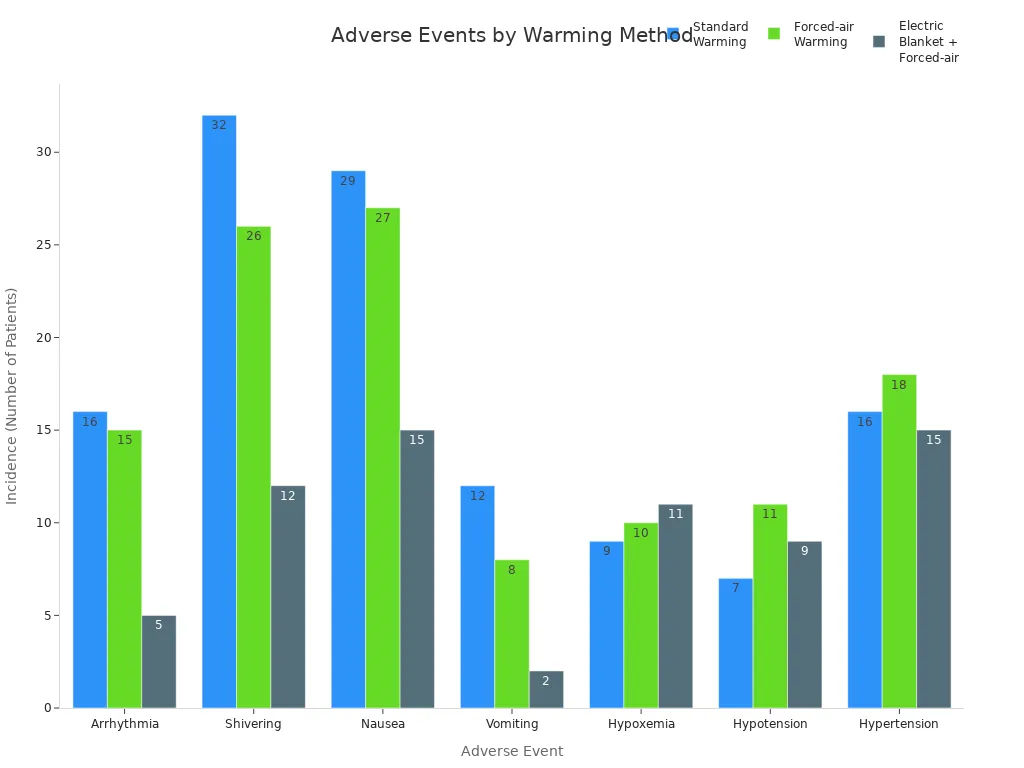
Using electric blankets with forced-air warming can make patients feel safer and more comfortable.
FAQ: Medical-Grade Electric Blankets
Q: What is the difference between medical-grade and consumer electric blankets?
A: Medical-grade blankets have special safety features and follow strict rules. Consumer blankets are made for comfort and may not protect as well.
Q: Which standards should I check before buying electric blankets for clinical use?
A: Look for UL 964 and FDA 510(k) certifications. These show the blanket is safe and meets medical device rules.
Q: Where are medical-grade electric blankets used in healthcare?
A: Hospitals, clinics, nursing homes, and home care use these blankets for surgery, recovery, and long-term care.
Q: How do electric blankets improve patient safety?
A: They help keep body temperature steady, lower problems, and reduce the risk of things like shivering and nausea.
Safety Certifications
When you pick electric blankets for clinics, check for safety certification. These certifications mean the product follows strict rules for safety and quality. They also show the blanket works well. Picking certified blankets helps keep patients and staff safe.
Certification Bodies
Many groups test and certify medical electric blankets. Each group checks different parts of safety and quality. You should know which groups are trusted and what their certifications mean.
|
Certification Body |
Scope of Certification |
|---|---|
|
CSA Group |
Domestic electrical appliances and medical equipment |
|
Intertek |
Medical equipment and domestic electrical appliances |
|
Underwriters Laboratories (UL) |
Medical equipment and domestic electrical appliances |
|
Northwest EMC, Inc. |
Medical equipment and domestic electrical appliances |
UL 964
UL certification is a trusted mark for electric blankets. UL 964 checks for electrical safety and fire resistance. Look for this certification when buying blankets for clinics. UL 964 needs:
- Electrical safety tests, like insulation resistance and ground checks.
- Mechanical safety checks, like strong covers and power cord strength.
- Heat tests for even warmth and good temperature control.
- Flammability tests to make sure the blanket puts out flames.
- Power density limits (≤0.5W/sq.cm) to stop overheating.
- Voltage compatibility with local power (110V/220V).
- Use of flame-resistant materials that meet standards like BS EN 597 or NFPA 701.
The process means picking a trusted lab, sending samples, and passing all tests before you get the UL certification report. Medical-grade electric blankets must also meet ISO 13485 for quality management.
FDA 510(k)
The FDA 510(k) process checks if a medical device is safe and works well. You need this clearance for electric blankets used with patients. The FDA looks at the device's design, materials, and test results. If the blanket is like one already approved, you can get clearance faster. FDA 510(k) makes sure the product meets U.S. medical device laws.
ETL, Oeko-Tex
ETL certification is another mark for electrical safety. It shows the blanket meets North American safety rules. Oeko-Tex certification checks for harmful chemicals in the fabric. If you see this label, the blanket is safe for skin and does not have dangerous chemicals.
Certification Requirements
Electrical Safety
You must make sure electric blankets pass tough electrical safety tests. These tests check insulation, ground wires, and strength against shocks. The blanket should not cause shocks or short circuits. UL and ETL marks focus on these points.
Biocompatibility
Blankets in clinics touch the skin for a long time. You need to check for biocompatibility. Oeko-Tex certification helps you know the materials are safe and free from bad chemicals. This is important for people with sensitive skin or allergies.
EMC Compliance
Medical electric blankets must work safely near other hospital equipment. EMC testing checks if the blanket can handle signals from things like phones or RFID readers. IEC 60601-1-2 is the main rule for EMC in medical devices. This rule makes sure the blanket works safely, even with strong signals around. The device must not stop working or act dangerously during EMC tests. If there is a problem, the blanket must recover quickly without special help.
Clinical Impact
Legal and Regulatory
You must follow all legal rules when buying electric blankets for clinics. Safety certification, like UL certification and FDA 510(k), helps you follow these laws. If you skip these steps, you could get fines or legal trouble.
Insurance and Liability
Hospitals and clinics need insurance to cover accidents. Insurance companies often want proof of safety certification. If you use blankets without certification, your insurance may not pay for injuries or damage. Certified products lower your risk and help you follow insurance rules.
Patient Outcomes
Certified medical-grade electric blankets help patient care. A big clinical trial showed certified blankets keep patients' body temperature steady during surgery. Patients had fewer problems with hypothermia and felt more comfortable. You can trust certified blankets to help patients recover better and avoid serious side effects.
Tip: Always ask for test reports and certificates before you buy. This helps you avoid unsafe products and keeps your patients safe.
FAQ: Safety Certifications for Medical Electric Blankets
Q: Which organizations certify medical electric blankets?
A: Groups like UL, CSA Group, Intertek, and Northwest EMC, Inc. test and certify electric blankets for safety and quality.
Q: What does UL 964 certification mean for electric blankets?
A: UL 964 shows the blanket passed tough tests for electrical safety, fire resistance, and material quality. It is an important mark for clinics.
Q: Why is EMC compliance important in hospitals?
A: EMC compliance means the blanket will not stop working or cause problems near other medical devices. This keeps patients safe in busy clinics.
Q: How do certifications affect patient care?
A: Certified blankets help keep patients warm and safe. They lower the risk of burns, shocks, and other problems. Studies show they help patients feel better and recover faster.
Compliance and Testing
You must check electric blankets for safety and quality. Testing and paperwork help you avoid danger. This keeps patients safe in clinics.
Testing Procedures
Insulation and Leakage
Check the insulation on every blanket. Good insulation keeps electricity inside. It stops leaks from hurting people. Test for leakage current to prevent shocks. IEC 60601-2-35:2020 gives the rules for these tests.
Overheating Control
Test how well the blanket controls heat. The blanket should not get too hot. Too much heat can burn skin or start a fire. Use sensors to watch the temperature. Make sure the blanket turns off or cools down if it gets too warm.
Durability
Pick blankets that last a long time. Test them for shock and vibration. These tests show if blankets can handle drops or bumps. Check water resistance with IPX1 or IPX2 ratings. This helps you know if the blanket works when wet.
Cleaning Validation
Hospitals clean blankets often. Test how blankets hold up after cleaning. Make sure controls and wires work after washing. Cleaning validation keeps blankets safe for every patient.
Tip: Always ask for usability paperwork. IEC 60601-1-6 says you need proof the blanket is easy to use.
Documentation Review
Test Reports
Ask suppliers for test reports. These reports show results for insulation, leakage, overheating, and durability. You need proof for every test.
Certificate Verification
Check certificates for standards like IEC 60601-2-35 and IEC 60601-1-11. Look for proof the blanket is Class II (internally powered, double insulated). If the blanket uses software, ask for IEC 62304 paperwork.
Red Flags
Watch out for missing or fake certificates. If a supplier cannot show test reports or insurance, do not buy from them. Say no to pushy offers or pressure. Always use formal forms and check suppliers against exclusion lists.
|
Required Documentation |
Purpose |
|---|---|
|
IEC 60601-2-35 Test Report |
Shows safety and performance |
|
IEC 60601-1-11 Compliance |
Proves home healthcare use |
|
Usability Documentation (IEC 60601-1-6) |
Shows ease of use |
|
IPX1/IPX2 Water Resistance Test |
Proves protection against liquids |
|
Mechanical Shock/Vibration Report |
Shows durability |
|
IEC 62304 Software Compliance |
Proves software safety |
|
Insurance Certificate |
Shows supplier coverage |
Ongoing Compliance
Supplier Audits
Audit suppliers often. Check their reputation and stability. Treat all suppliers fairly. Use formal forms and check for insurance. Work with more than one supplier to compare electric blankets, heated blanket, and electric throw blanket.
Incident Reporting
Set up a way to report problems. If a blanket fails or hurts someone, report it fast. Track problems and review them with your team. This helps you fix issues and keep patients safe.
Note: Think about the whole product life, like warranty, maintenance, and training costs. Do not rush because of supplier pressure or low stock.
FAQ: Compliance and Testing
Q: What tests should I ask for when buying medical electric blankets?
A: Ask for insulation, leakage, overheating, durability, and cleaning validation tests.
Q: Which documents prove compliance with safety standards?
A: Look for IEC 60601-2-35, IEC 60601-1-11, usability paperwork, water resistance, mechanical shock, and software safety reports.
Q: How do I keep compliance after purchase?
A: Audit suppliers, review problem reports, and check paperwork often. Make sure staff know how to use and clean each electric blanket queen safely.
Q: What are warning signs when reviewing supplier documents?
A: Missing certificates, fake reports, and pushy tactics are red flags. Only buy from suppliers who give full paperwork and insurance.
Clinical Adaptation
Product Features
Temperature Control
You need to control the temperature very carefully. Pick blankets with heat settings you can change. These settings help you give each patient the right warmth. Automatic shut-off makes the blanket safer. Overheat sensors stop the blanket from getting too hot. This keeps patients safe from burns and helps you follow hospital rules.
User Interface
A simple user interface helps staff do their jobs. Choose blankets with easy buttons and displays you can read. Staff can set the temperature and check the blanket quickly. Some blankets have lights or alarms for problems. These alerts help you fix issues fast.
Integration
Blankets should work well with your hospital tools. Some connect to blanket warmers or hospital beds. This saves time and helps staff make fewer mistakes. Some blankets work with electronic health records. This makes it easier to track patient care.
Workflow Compatibility
Portability
Portability is important in busy clinics. Lightweight blankets and electric throw blankets are easy to move. Handles or cases help staff carry them safely. You can use portable blankets in emergency rooms, ambulances, or homes.
Adaptability
Adaptable blankets work in many places. You can use a heated blanket for surgery, recovery, or long-term care. Some come in different sizes, like electric blanket queen, to fit beds. Straps or fasteners help you keep the blanket in place.
Infection Control
Stopping infection is very important. Use waterproof covers to protect blankets from spills. Keep blankets away from wet areas. Always clean blankets as the manufacturer says. Check blankets for damage after washing. Store blankets in a dry spot and do not press hard on the wires.
Tip: If a blanket gets wet, unplug it right away. Wait until it is dry before using it again.
Risk Management
Hazard Mitigation
You can lower risks by doing these things:
- Check blankets often for damage or burn marks.
- Clean and care for blankets as the instructions say.
- Use blankets only the way you are told.
- Never fold blankets while they are on.
- Store blankets right and replace old or broken ones.
- Use safety features like automatic shut-off and overheat sensors.
- Keep fire extinguishers close and know first aid for shocks.
Staff Training
Teach all staff how to use blankets safely. Show them how to set temperatures and spot damage. Make sure they know how to clean and store blankets. Good training keeps patients safe and stops accidents.
Emergency Protocols
Have clear steps for emergencies. Staff should know how to unplug blankets if they break or get wet. Keep emergency tools, like fire extinguishers, near patient areas. Go over emergency steps with your team often.
FAQ: Clinical Adaptation
Q: How do I choose the right temperature control features for my clinic?
A: Pick blankets with adjustable heat, automatic shut-off, and overheat sensors. These features help keep patients safe.
Q: What makes an electric blanket easy to use in a busy hospital?
A: Simple controls, clear displays, and portable designs help staff use blankets quickly and safely.
Q: How can I reduce risks when using electric blankets in healthcare?
A: Check blankets often, follow cleaning instructions, train staff, and keep emergency tools nearby.
User Feedback
Pilot Testing
You should always test a medical-grade electric blanket in your clinic before full use. Pilot testing helps you see how the blanket works in real situations. You can check if the heated blanket keeps patients warm and safe. Staff can try the controls and see if the electric throw blanket is easy to use. You can also test how well the electric blanket queen fits different beds and patient sizes.
During pilot testing, you should:
- Select a small group of patients and staff for the trial.
- Use the medical-grade electric blanket in different clinical areas, such as surgery, recovery, and emergency care.
- Record data on temperature stability, patient comfort, and any problems.
- Ask staff to note if the blanket is easy to clean and store.
Tip: Use a checklist to track each feature, such as temperature control, safety alarms, and cleaning steps. This helps you collect clear data.
Pilot testing often reveals issues you might miss during regular checks. For example, you may find that a heated blanket does not reach the right temperature in a cold room. You may also see that the electric throw blanket needs better labeling for controls. These findings help you choose the best product for your clinic.
Feedback Integration
After pilot testing, you need to gather feedback from everyone who used the medical-grade electric blanket. You should ask staff and patients about their experience. Did the blanket keep them warm? Was it easy to use? Did they feel safe?
You can use surveys, interviews, or group meetings to collect feedback. Make sure you ask about:
- Comfort and warmth for patients
- Ease of use for staff
- Safety features, such as automatic shut-off
- Cleaning and storage steps
- Once you have feedback, you should review it with your team. Look for patterns or repeated comments. If many people say the electric blanket queen is too heavy, you may need a lighter model. If staff report that the heated blanket is hard to clean, you should ask the supplier for better instructions.
- You should also share your findings with the supplier. Good suppliers will help you solve problems or offer product updates. By using feedback, you make sure the medical-grade electric blanket fits your clinic's needs and keeps patients safe.
Note: Always document changes you make after feedback. This helps you track improvements and meet safety rules.
FAQ: User Feedback on Medical-Grade Electric Blankets
Q: Why is pilot testing important for medical-grade electric blankets?
A: Pilot testing lets you see how the blanket works in real clinical settings. You can find problems early and make sure the blanket is safe and easy to use.
Q: How should I collect feedback after pilot testing?
A: Use surveys, interviews, or meetings with staff and patients. Ask about comfort, safety, and ease of use.
Q: What should I do with the feedback I collect?
A: Review the feedback with your team. Look for common issues. Share your findings with the supplier and make changes as needed to improve safety and comfort.
Procurement Checklist
Pre-Purchase Steps
Needs Assessment
Begin by thinking about what your clinic needs. Count how many patients you have. Think about the types of procedures you do. Look at the rooms where you will use blankets. Decide if you need a heated blanket for surgery. You might need an electric throw blanket for emergencies. You may want an electric blanket queen for bigger beds. Write down what you need, like temperature range and size. Include cleaning needs in your list. This helps you buy the right product.
Supplier Comparison
Look at different suppliers before you buy anything. See if they have safety certification for their products. Pick suppliers who show clear certification and testing info. Ask about delivery times and support. Check their return policies too. Make a list of good and bad points for each supplier. Choose suppliers with good reviews and a strong history.
Product Samples
Ask for samples before you buy a lot of blankets. Try the samples in your clinic. Let staff and patients use the blankets. See if the controls are easy to use. Make sure the blanket feels comfortable. Check if the blanket fits your beds. See if it works with your cleaning process. Testing samples helps you find problems early.
Documentation
Certification Records
Always ask for proof of safety certification. Look for marks like UL or ETL on the blanket and paperwork. These marks mean the blanket passed tough safety tests. Check the documents to make sure they are real and current. Never buy blankets without proper certification records.
Warranty and Support
Check the warranty and support options. Many suppliers give warranties for one to five years. A good warranty covers heating elements, cords, and controls. Some suppliers want you to return the product in its original box. They may charge a restocking fee. Ask about help with setup or fixing problems. A strong warranty and support plan protect your money.
|
Component |
Warranty Duration |
Return Policy Details |
|---|---|---|
|
Heating Elements, Power Cord |
1 year |
Returns need a valid RMA within 30 days, original packaging, possible restocking fee. |
|
AC Power Supply |
2 years |
Purchaser pays shipping for returns. |
Supplier Reputation
Check each supplier's reputation before you buy. Read reviews from other clinics. Pick suppliers who answer questions fast and fix problems. Stay away from suppliers with lots of complaints or missing info. A trusted supplier helps you avoid delays and unsafe products.
Post-Purchase
Acceptance Testing
Test every electric blanket before you use it with patients. Follow these steps:
- Look for safety certifications like UL or ETL marks.
- Check the blanket for defects, like loose threads or cords.
- Try all heat settings and controls.
- Feel the material to see if it is soft and strong.
- Make sure safety features like automatic shut-off work.
- Wash or spot-clean the blanket to see if it holds up.
- Only use new blankets from trusted suppliers.
- Testing helps you find problems before they hurt patient care.
Staff Training
Teach your staff how to use and care for the blankets. Show them how to set temperatures and use safety features. Teach them how to clean the blankets. Good training keeps patients safe and helps blankets last longer.
Performance Monitoring
Watch how the blankets work over time. Ask staff to report problems, like uneven heating or broken controls. Check these reports often. Replace or fix blankets that do not work well.
Tip: Regular checks and training help you keep safety high and avoid mistakes.
FAQ: Procurement Checklist for Medical-Grade Electric Blankets
Q: What should I check before buying electric blankets for my clinic?
A: Think about your needs, compare suppliers, and test samples. Always ask for safety certification and check warranty details.
Q: Why is documentation important in the procurement process?
A: Documentation shows the blanket meets safety rules and helps you avoid unsafe or fake products.
Q: What steps should I take after receiving new electric blankets?
A: Test each blanket for defects, try all controls, and check safety features. Train staff and watch performance often.
Q: How can I avoid common procurement mistakes?
A: Always check certifications, test products before use, and pick suppliers with a good reputation.
Common Pitfalls
When you buy a medical-grade electric blanket, you want to avoid mistakes. These mistakes can make things unsafe, waste money, and hurt patient care. If you know what to look for, you can make better choices.
Certification Oversight
Always check for the right certification before using any medical-grade electric blanket. Some clinics forget to check if the blanket meets safety rules. This mistake can put patients in danger and cause legal trouble.
- Always ask for current certificates like UL or ETL.
- Make sure the blanket meets electrical safety and biocompatibility rules.
- Look at the paperwork for each heated blanket, electric throw blanket, or electric blanket queen you want to use.
- Never trust a product without clear certification records.
Tip: Missing or fake certificates are a warning sign. Only buy from suppliers who give real, up-to-date documents.
Adaptation Gaps
Sometimes, a medical-grade electric blanket does not fit your clinic's needs. This can happen if you skip pilot testing or do not listen to staff feedback. Blankets that do not match your workflow can slow down care or make patients uncomfortable.
- Test each blanket in real clinic settings before using it everywhere.
- Ask staff and patients what they think about comfort, controls, and cleaning.
- Make sure the blanket fits your beds and works with your cleaning steps.
- Pick blankets with settings you can change for different patients.
If you do not fix adaptation gaps, you might waste money on blankets that do not work well.
Maintenance Planning
Many clinics forget to plan for regular care. Poor care can make your medical-grade electric blanket break faster and cause safety problems. You need a clear plan to keep blankets safe and working.
Follow these steps for good maintenance:
- Unplug the blanket and work in a dry place before repairs.
- Check the fabric for tears, burns, or wire damage.
- Use a multimeter to check for broken heating wires.
- Fix broken wires with the right tools and insulation.
- Test the blanket after repairs to make sure it heats safely and evenly.
- Check the control unit for loose or broken parts.
- Store blankets rolled up, not folded, in a cool, dry spot.
- Clean blankets the way the manufacturer says.
- Use surge protectors to stop damage from power spikes.
- Replace blankets that are old, damaged, or show signs of overheating.
Note: Regular checks and following the manufacturer's instructions help stop accidents and make your blankets last longer.
FAQ: Common Pitfalls in Medical-Grade Electric Blanket Procurement
Q: What happens if I skip checking certifications?
A: You might use unsafe products, which can hurt patients and cause legal trouble.
Q: How can I make sure a medical-grade electric blanket fits my clinic's needs?
A: Test the blanket in your clinic, ask staff and patients for feedback, and check if it works with your cleaning and workflow.
Q: What are the best ways to maintain a medical-grade electric blanket?
A: Check blankets before each use, follow cleaning steps, store them the right way, and replace them if they are damaged or old.
You can keep your clinic safe by using a simple plan. Always look for certifications before you buy blankets. Test every medical-grade electric blanket before using it. Make sure your staff knows how to use the blankets. Studies say keeping patients warm is good, but you must watch for risks. Keep checking blankets to find problems early. This helps your heated blanket, electric throw blanket, or electric blanket queen stay safe. Use the checklist to protect patients and your clinic each day.
FAQ
How long does a medical-grade electric blanket usually last?
A medical-grade electric blanket can last three to five years. You need to take good care of it. Always look for damage like frayed wires or uneven heat. If you see any problems, replace the blanket right away.
What should you do if your electric blanket stops heating?
Unplug the blanket first. Check the power cord and controls for problems. Try a different outlet to see if it works. If it still does not heat, stop using it. Call your supplier for help or a new blanket.
Can you use a heated blanket or electric throw blanket for patients with sensitive skin?
You can use these blankets for people with sensitive skin. Make sure the blanket has adjustable heat and safe materials. Always watch the patient's skin. Use the lowest heat that works.
How do you store an electric blanket queen safely?
Roll the electric blanket queen loosely, do not fold it. Keep it in a cool, dry place. Do not put heavy things on top. This helps stop wire damage and keeps the blanket working longer.
What is the environmental impact of using medical-grade electric blankets?
Medical-grade electric blankets use less energy than room heaters. They give warmth to just one spot, so you save energy. When the blanket is old, recycle it the right way.
Are there special cleaning steps for heated blankets in infection control areas?
Yes, you must follow the maker's cleaning steps. Use only approved cleaners. Make sure the blanket is dry before using it again. This helps stop infection and keeps patients safe.
What should you do if a patient reports discomfort while using an electric blanket?
Stop using the blanket right away if a patient feels bad. Check the heat setting and look for damage. Try a lower heat or use something else to warm the patient. Always tell your supervisor about the problem.
Can you use an electric throw blanket or electric blanket queen with other warming devices?
You can use these blankets with other warming tools if you follow safety rules. Never put two electric blankets on top of each other. Always check the patient's temperature and comfort to stop overheating.