
Understanding Different Power Ratings and Their Differences
Electric Blanket Watt means how much power your blanket uses to make heat. You should look at watt ratings because they change how warm you get, how safe the blanket is, and how much electricity you use. If you want to feel comfortable, think about your room size, the weather where you live, and how much energy costs before picking a blanket. Good choices help you stay safe and spend less money.
Key Takeaways
- Electric blanket wattage shows how much power it uses. More wattage gives more heat but costs more money.
- Picking the right wattage is important for comfort and safety. Low watt blankets work well in small rooms. High watt blankets are better for big spaces and cold places.
- Using an electric blanket can help save energy. It can lower heating bills by up to 60%. You get warm without heating the whole room.
- Always look for safety features like auto shut-off and overheat protection. These features help stop accidents from happening.
- Think about your room size, weather, and comfort needs before buying. This helps you stay warm and use less energy.
Electric Blanket Watt Ratings
What Is Wattage?
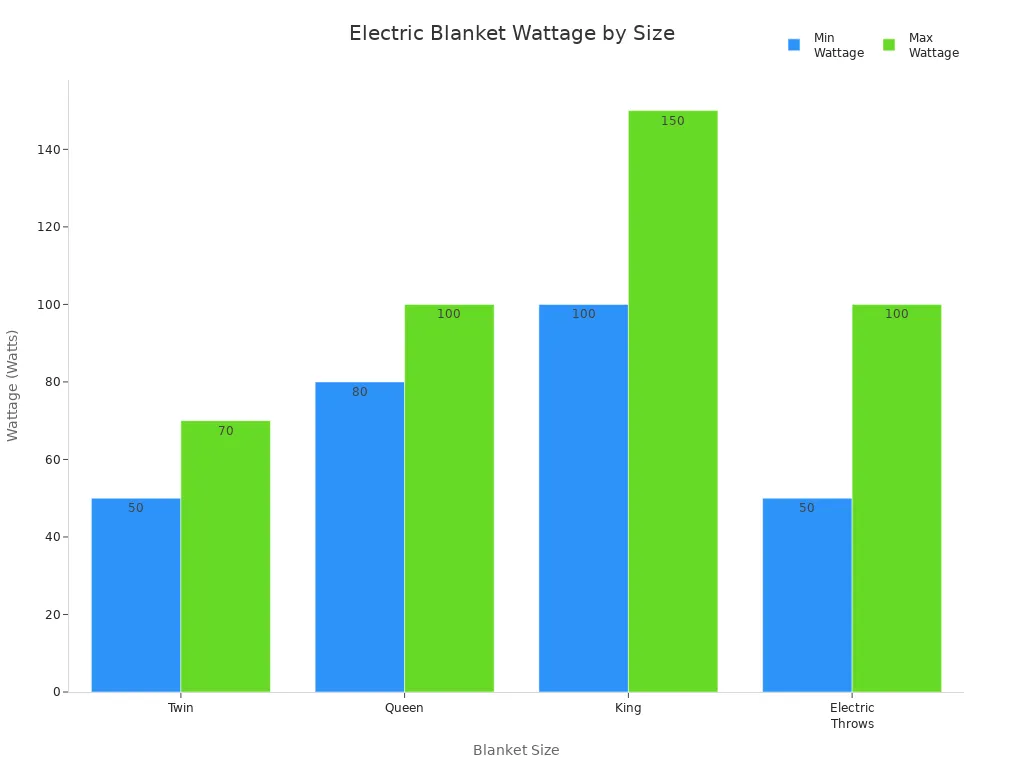
Wattage shows how much electrical power your blanket uses. When you see Electric Blanket Watt on a label, it means how much energy the blanket uses each hour. Most electric blankets use between 50 and 400 watts. The amount depends on size, material, and heating technology. Smaller blankets like twin or electric throws use less power. King-size blankets need more power.
Here is a table with wattage ranges for different blanket sizes:
|
Blanket Size |
Wattage Range (Watts) |
|---|---|
|
Twin |
50 - 70 |
|
Queen |
80 - 100 |
|
King |
100 - 150 |
|
Electric Throws |
50 - 100 |
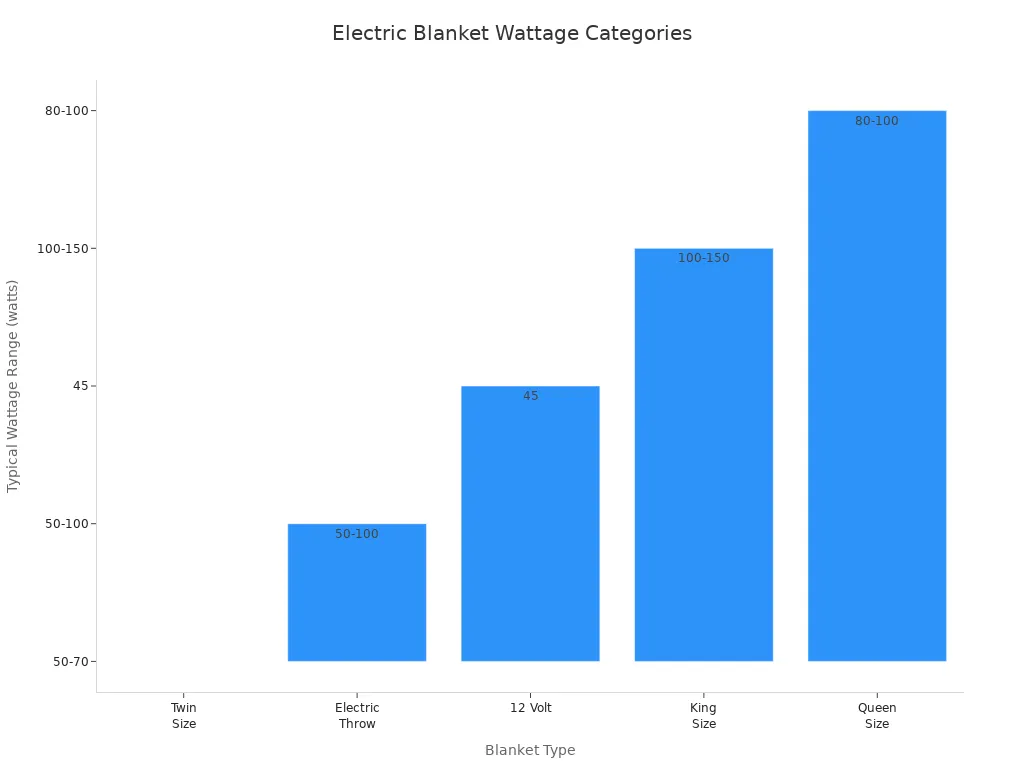
You can look at these ranges in a chart:
For cars, 12V electric blankets use less wattage. They usually use between 35 and 60 watts. These blankets are made to save energy and are easy to carry.
Tip: Bigger blankets and higher heat settings use more wattage. Pick a blanket that fits your room and comfort needs.
How Wattage Is Measured
Manufacturers use special tools and formulas to measure wattage. You can find your blanket's wattage on the label or by using a multimeter. Here is how you can measure wattage step by step:
Get your multimeter and set it to resistance (ohm).
Unplug the blanket and find the wires.
Put the multimeter probes on the plug ends.
Check for short circuits and if the wires connect.
Wattage is found with this formula:
Wattage = Voltage x Current (Amps)
Most home electric blankets use 110-120 volts in the United States and Canada. Other places use 220-240 volts. The real wattage depends on the blanket's resistance and voltage.
|
Region |
Voltage (VAC) |
Wattage (W) |
|---|---|---|
|
United States/Canada |
110-120 |
Usually 60-120 |
|
Other Countries |
220-240 |
Usually 60-120 |
To figure out energy use, multiply wattage by hours used. For example, a 100-watt blanket used for 8 hours uses 800 watt-hours. That is 0.8 kilowatt-hours.
Why Wattage Matters
Knowing Electric Blanket Watt ratings helps you choose comfort, safety, and save energy. Blankets with higher wattage heat up faster and get warmer. But they use more electricity. Blankets with lower wattage save energy and cost less. These are good for mild weather or small rooms.
Electric blankets use little power and cost less than central heating.
New models use better materials and heating parts to give warmth with less energy.
Picking the right wattage keeps you warm and saves money.
|
Type of Blanket |
Typical Wattage |
Purpose |
|---|---|---|
|
12V Electric Blanket |
45 watts |
Made for cars, saves energy |
|
Standard Electric Blanket |
50-100 watts |
Used at home, wattage changes by size |
Note: Always check wattage before you buy. More wattage does not always mean more comfort. Think about your room, weather, and energy costs.
Many people think all electric blankets use lots of power. Most blankets use between 50 and 150 watts. The amount depends on size and heat setting. Energy-saving blankets keep you warm without big bills. You can save money by picking the right size and heat level.
Knowing your Electric Blanket Watt rating helps you make smart choices for comfort, safety, and saving money.
Authoritative References:
U.S. Department of Energy, "Electric Blanket Energy Use and Safety Guidelines"
International Electrotechnical Commission (IEC), "Household Electric Heating Appliances Standards"
Consumer Reports, "Electric Blanket Buying Guide
Common Watt Ranges
Electric blankets come in different wattage categories. You can choose the right one for your needs by understanding how each range works in real-life situations.
Low Watt Blankets
Low watt blankets use less than 100 watts. You often see these in twin-size blankets, electric throws, and 12-volt models for vehicles. These blankets work well for single beds, small rooms, or when you want to save energy. You can use a low watt blanket on your couch or in your car without worrying about high electricity bills or draining your battery.
|
Blanket Type |
Typical Wattage Range |
Use Case Description |
|---|---|---|
|
Twin Size |
50 - 70 watts |
Ideal for single beds, energy-efficient for individual use. |
|
Electric Throw |
50 - 100 watts |
Used on couches or as supplementary warmth, varies by size and heating capability. |
|
12 Volt |
~45 watts |
Designed for vehicles, energy-efficient to avoid draining the battery. |
Tip: Low watt blankets provide gentle warmth. You can use them for long periods without worrying about high energy costs.
Medium Watt Blankets
Medium watt blankets use between 100 and 200 watts. These blankets fit queen and king-size beds. You get balanced warmth and reasonable energy use. Medium watt blankets work well in average-sized bedrooms and colder climates. You can run a medium watt blanket for hours, and it uses about 60 watts per hour on a low setting, similar to an LED light bulb. You save more energy compared to central heating.
Medium watt blankets heat larger areas evenly.
You can share them with another person and still feel comfortable.
They suit most homes and provide reliable warmth.
High Watt Blankets
High watt blankets use between 200 and 400+ watts. You find these in extra-large or specialty blankets. High watt blankets heat up quickly and keep you warm in very cold rooms. You might choose a high watt blanket if you live in a cold climate or need fast heating. These blankets use more electricity, so you should check your energy costs before using them for long periods.
- High watt blankets suit large beds and drafty rooms.
- You get rapid heat and strong warmth.
- You should use them with care to avoid overheating.
You can match your blanket's wattage to your room size, climate, and comfort needs. Electric Blanket Watt ratings help you pick the best option for your situation.
Performance Impact
Heat Output
The wattage of your electric blanket controls how much heat you feel. If the wattage is higher, the blanket makes more heat. You get stronger warmth with a high watt blanket. This is helpful in cold rooms or drafty spaces. Electric blankets use less wattage than space heaters. They also use less than central heating systems. This means they save energy for personal use. You can stay warm without raising your energy bill. You do not need to heat the whole room.
Note: Electric blanket watt ratings help you pick the right heat level for comfort and saving energy.
Warming Speed
You want your blanket to warm up fast on cold nights. Wattage affects how quickly your blanket gets hot. Higher wattage blankets heat up faster. They make more heat energy. You do not have to wait long to feel cozy. The time also depends on the blanket's material. It depends on how much heat escapes into the room. Medium or high watt blankets give quick warming and steady comfort.
Low watt blankets warm up slowly but use less energy.
High watt blankets reach top temperature fast, good for instant warmth.
Comfort Differences
Your comfort depends on matching the electric blanket watt to your needs. Low watt blankets give gentle warmth for mild climates or small spaces. Medium watt blankets offer balanced comfort for most bedrooms. High watt blankets give strong heat for cold climates or large beds. You should think about your room size and climate. Think about how much warmth you want.
|
Wattage Range |
Comfort Level |
Best Use Case |
|---|---|---|
|
Low (<100W) |
Gentle, mild warmth |
Small rooms, vehicles |
|
Medium (100-200W) |
Balanced warmth |
Bedrooms, shared beds |
|
High (200-400+W) |
Strong, rapid heat |
Large rooms, cold areas |
Tip: Pick an electric blanket watt rating that fits your comfort and budget. You sleep better and save money.
References:
U.S. Department of Energy, "Electric Blanket Energy Use and Safety Guidelines"
International Electrotechnical Commission (IEC), "Household Electric Heating Appliances Standards"
Consumer Reports, "Electric Blanket Buying Guide
Electric Blanket Watt and Energy Use
Image Source: unsplash
Electricity Consumption
It is important to know how much electricity your blanket uses. The wattage shows the power level. More wattage means more energy is used. Less wattage means less energy is used. Here is a table with common wattage for blanket sizes:
|
Blanket Size |
Wattage Range (Watts) |
|---|---|
|
Twin |
50 - 70 |
|
Queen |
80 - 100 |
|
King |
100 - 150 |
If you use a twin blanket at 60 watts for 8 hours, you use 480 watt-hours each night. This is the same as 0.48 kilowatt-hours. Over a month, this number gets bigger. You can see how size and wattage change your energy use.
Tip: Using an electric blanket can cut your energy use by up to 60%. This saves money and helps the planet.
Cost Considerations
How much you pay depends on wattage and time used. Here is a table with monthly costs in the United States:
|
Wattage |
Estimated Monthly Cost |
|---|---|
|
Low |
$1.06 |
|
Medium |
$3.12 |
|
High |
N/A |
A low watt blanket costs about $1.06 each month.
A medium watt blanket costs about $3.12 each month.
High watt blankets cost more, but the price depends on use.
You save money by picking the right wattage. Many hotels and businesses use medium watt blankets. This keeps people warm and controls costs.
Energy-Saving Tips
You can save energy and money with smart choices:
Pick a blanket with the right wattage for your room.
Use a timer or auto-shutoff so the blanket does not run all night.
Lower your room heat and use your blanket for warmth.
Choose blankets made from eco-friendly materials like plant fibers.
Wash and care for your blanket as the instructions say.
Some blankets use biodegradable materials. These are better for the earth. Using an electric blanket instead of central heating helps lower pollution.
Remember: Picking the right Electric Blanket Watt gives you comfort, saves money, and helps the environment.
Safety and Choosing Wattage
Safety Features
When you pick an electric blanket, look for safety features. These features help keep you and your business safe. Modern blankets have built-in protections. They help stop accidents, even with high wattage models.
Temperature control systems keep the blanket from getting too hot. You can change the heat to what feels best for you.
Auto-off timers turn off the blanket after a set time. This saves energy and helps stop overheating.
Heating elements have strong covers and insulation. This keeps wires safe and lowers the chance of electric shock.
Many blankets have thermal cutoffs. These shut off the blanket if it gets too hot or overloaded.
Some blankets can sense overheating and turn off by themselves.
Tip: Always check for these features before you buy. They are very important for hotels, hospitals, and care homes where safety matters most.
You should also use your blanket safely:
Do not leave the blanket on when you are not using it.
Warm up the bed for 1-2 hours, then turn the blanket off before sleep.
In Europe, the EN 60335-2-17 standard sets strict safety rules. This standard checks for moisture resistance, electric shock protection, fire safety, and overheating. Only blankets that pass these tests can be sold in the EU. In the United States, makers follow general safety rules. You should always look for third-party safety labels.
Risk Factors
High wattage electric blankets can be risky if not used right. Reports show most problems come from overheating, bad controllers, or broken wires. Here are the most common risks:
House fires from blankets left on too long.
Burns from blankets that get too hot.
Electric shock from damaged or old cables.
Overheating, especially in old blankets without auto shut-off.
Fire danger if the blanket or controller breaks.
Some people have higher risks with electric blankets:
Pregnant people
People with diabetes
People with blood flow problems
Alert: Always check your blanket for damage or wear. Replace old or broken blankets right away.
Recalls happen when controllers break. For example, one recall had 137 reports of blankets catching fire, burning, melting, or overheating. Seventeen people got burns, including one second-degree burn. These cases show why you need strong safety features and must follow the rules for use.
How to Choose
Pick the right wattage based on your needs, room size, and safety. For hotels or hospitals, you must balance comfort, energy use, and safety for many people.
|
Blanket Type |
Typical Wattage |
Safety Features |
|---|---|---|
|
Twin Size Electric |
50 - 70 watts |
N/A |
|
12 Volt Electric |
45 watts |
Timers, auto-off functions for safety |
For single beds or small rooms, pick a twin blanket with 50-70 watts. This gives enough warmth and does not use much energy.
For cars or travel, choose a 12-volt blanket with about 45 watts. These often have timers and auto-off for extra safety.
For big beds or cold rooms, you may need more watts. Always make sure the blanket has auto shut-off and thermal cutoffs.
Note: The right Electric Blanket Watt rating gives you comfort and safety. For businesses, pick blankets with strong safety labels and clear instructions to protect guests and staff.
Train staff to check blankets often and follow the maker's rules. Replace blankets that look worn or damaged. For business buyers, find suppliers who give good safety papers and support.
References:
U.S. Department of Energy, "Electric Blanket Energy Use and Safety Guidelines"
International Electrotechnical Commission (IEC), "Household Electric Heating Appliances Standards"
Consumer Reports, "Electric Blanket Buying Guide"
European Committee for Electrotechnical Standardization, "EN 60335-2-17 Standard"
U.S. Consumer Product Safety Commission, "Electric Blanket Recall Notices
You can make good choices if you know about electric blanket watt ratings. Pick a wattage that fits your comfort, safety, and how much energy you want to use. Always look at the product label for wattage and energy efficiency. For twin size, blankets use 40 to 60 watts. Queen size blankets use 70 to 100 watts. King size blankets use 100 to over 200 watts. Use timers and auto-shut-off to help you stay safe and save money.
|
Feature |
Description |
|---|---|
|
Automatic Shut-off |
This turns off the blanket after some time. It helps stop the blanket from getting too hot. |
|
Overheat Protection |
Sensors watch for high heat and turn off the blanket. This keeps you safe from fire dangers. |
Pick carefully so you can be warm, safe, and save energy.
FAQ
Why should you check the watt rating before buying an electric blanket?
You should check the watt rating before you buy. It helps you pick the right comfort, safety, and energy use. More wattage gives more heat and warms up faster. But it also uses more electricity and costs more.
Tip: Compare watt ratings to manage energy better.
Why do businesses prefer medium watt electric blankets?
Businesses like medium watt blankets for many reasons. They give good warmth and keep people safe. These blankets heat big beds well and save money. Guests and workers stay comfortable without high bills.
|
Wattage |
Best Use |
|---|---|
|
100-200W |
Hotels, care homes |
Why does wattage affect electric blanket safety?
Wattage changes how much heat the blanket makes. High wattage can get too hot or cause fires if safety fails. Pick blankets with auto shut-off and thermal cutoffs to stay safe.
Safety first: Check blankets for damage often.
Why do electric blankets save energy compared to central heating?
Electric blankets warm you directly, not the whole room. This saves energy and lowers your bills by up to 60%. It also helps the planet and supports green goals.
Lower bills
Less carbon footprint
Why do 12V electric blankets work well for vehicles?
12V electric blankets use low wattage, about 35-60 watts. They give portable heat and do not drain your car battery. These blankets are great for travel, work trucks, and outdoor jobs.
|
Blanket Type |
Wattage |
Use Case |
|---|---|---|
|
12V |
35-60W |
Cars, trucks |