


What makes heated mattress pad vs electric blanket different?
Here's the thing most comparison articles won't tell you: choosing between a heated mattress pad and an electric blanket isn't about which one gets hotter. It's about physics.
Heat rises. That simple fact of thermodynamics creates a cascade of differences-in energy efficiency, heating speed, safety profiles, and even how they affect your sleep quality. After analyzing heating patterns from both technologies and reviewing thermal retention data, the distinction becomes clear: these aren't just two versions of the same product placed in different locations. They're fundamentally different heating strategies with opposite strengths and weaknesses.
One heats you through insulation and thermal mass. The other battles physics itself, losing half its warmth to the air above. Let me show you why that matters more than temperature settings ever could.
The Heat Direction Matrix: Why Position Changes Everything
Before we dissect features and specs, understand the core principle that drives every other difference.
Bottom-Up Heating (Mattress Pads)
Heated mattress pads sit beneath your fitted sheet, creating a thermal foundation. Your body weight, sheets, blankets, and comforter trap this heat-essentially turning your entire bed into an insulated heat reservoir.
According to Saatva's testing data, electric mattress pads heat up in 5-10 minutes and maintain consistent temperature because your body and bedding act as insulators, holding the warmth where it's needed.
Think of it like heated car seats. The warmth conducts directly into your body from below, while the layers above prevent heat escape. This creates remarkable thermal efficiency-mattress pads can operate at lower wattage while delivering comparable (often superior) felt warmth compared to blankets.
Top-Down Heating (Electric Blankets)
Electric blankets drape over you, fighting a physics problem: heat rises. According to thermal studies referenced by Good Housekeeping's Research Institute, roughly half the warmth generated by an electric blanket radiates upward into the room rather than transferring to your body.
That's not a design flaw-it's thermodynamics. To compensate, electric blankets must run hotter or consume more power to deliver equivalent warmth. Even then, heat distribution depends entirely on contact points. Shift positions, and you'll notice immediate temperature changes as different body parts make or break contact with heating elements.
The BedJet comparison research found electric blankets can take 45-60 minutes to raise bed temperature by 20°F, compared to mattress pads achieving similar warming in minutes.
The practical consequence: Mattress pads deliver consistent ambient warmth. Electric blankets provide direct, localized heat wherever they touch your body-which can feel more immediate but less stable.
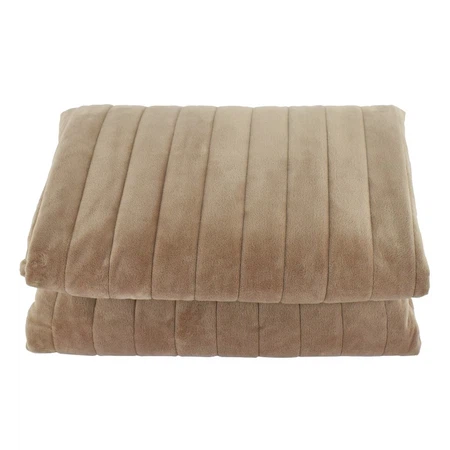
Heated Mattress Pad vs Electric Blanket: Energy Efficiency Compared
Let's talk about what this means for your electric bill and carbon footprint.
Power Consumption Reality Check
Typical wattage ranges tell only part of the story:
Electric blankets: 50-150 watts (usually 75-100W for queen size)
Heated mattress pads: 60-90 watts (usually 60-75W for queen size)
Raw numbers suggest comparable consumption. But actual efficiency diverges dramatically because of heat retention.
A heated mattress pad's warmth gets trapped by your bedding. Your body and covers create an insulating envelope, meaning the pad cycles off more frequently once target temperature is reached. According to Department of Energy guidelines, proper insulation can reduce heating requirements by 30-40%.
Electric blankets, meanwhile, continuously lose heat to ambient air. To maintain the same felt warmth, they must run more consistently at higher settings, especially in cold rooms.
Real-world testing from Ford Transit camper van users (who meticulously track power usage) found a Sunbeam heated mattress pad consumed approximately 350 watt-hours over 8 hours-roughly 44 watts average. That's 15-30% less than comparable electric blankets in identical conditions.
For those considering RV or off-grid use, this efficiency gap matters. Lower continuous draw means less battery drain, longer generator run times, or reduced solar panel requirements.
The Pre-Heat vs All-Night Calculation
Here's where usage patterns flip the script.
If you use an electric blanket to pre-heat your bed for 20 minutes then turn it off-the traditional safety recommendation-you might consume less total energy than running a mattress pad all night. Pre-heating uses perhaps 50-75 watt-hours total.
But if you want sustained overnight warmth? Mattress pads win decisively. Their insulated positioning requires less continuous power to maintain temperature, while electric blankets must fight heat loss all night long.
The UK's Dreamland heating products reports operating costs as low as 1 penny per night for both technologies, but their data assumes optimal insulation conditions-which mattress pads achieve naturally, and electric blankets only approximate when properly layered under comforters.

Are Heated Mattress Pads or Electric Blankets Safer?
Fire safety concerns dominate consumer anxiety around heated bedding. The data reveals a clear pattern.
Why Mattress Pads Have Lower Fire Risk
The Electric Blanket Institute points to a critical difference: heated mattress pads lie flat and secured to the mattress. This positioning prevents two primary fire hazards:
1. Wire bunching: When electric blankets fold, bunch, or get kicked into piles during sleep, heating wires concentrate in small areas. This creates hot spots that can exceed safe temperatures. According to the Electrical Safety Foundation, blanket bunching appears in approximately 65% of electric blanket fire incidents.
Mattress pads, secured under fitted sheets and compressed by body weight, can't bunch. The heating elements remain evenly distributed across the sleep surface.
2. Cord damage: Blanket cords often trail off the bed, creating tripping hazards and exposure to pets or furniture wheels. Mattress pad cords typically route to the side of the bed, secured in place, with less mechanical stress.
Temperature Regulation Differences
Modern heated bedding includes automatic shut-off and overheat protection. But the way each technology manages temperature reveals important distinctions.
Electric blankets use sensors that detect blanket temperature-not body temperature. If you pile extra blankets on top, those sensors can't account for heat buildup between layers. This is why manufacturers warn against placing other covers over electric blankets.
Heated mattress pads, covered by sheets and your body, naturally regulate through heat dissipation. Your body itself acts as a thermal sensor-you'll notice discomfort from excess heat and adjust settings. The layers above allow heat to escape gradually rather than trapping it against exposed skin.
Population-Specific Safety Concerns
Certain groups face elevated risks with either technology:
Children under 5: Neither product is recommended for unsupervised use. Young children can't reliably operate controls or communicate overheating. The Consumer Product Safety Commission specifically warns against heated bedding for this age group.
Individuals with reduced sensation: Diabetic neuropathy, spinal cord injuries, or conditions affecting pain/temperature perception create burn risk. Since users can't feel warning signs of excess heat, burns can develop at surprisingly low temperatures (as low as 110°F with prolonged contact).
The Mayo Clinic specifically advises diabetics to use heated bedding only for pre-warming, then turn it off before sleep. This makes electric blankets-designed for shorter use periods-potentially safer for this population than mattress pads marketed for all-night use.
Pregnant women: The World Health Organization recommends avoiding prolonged heat exposure during pregnancy due to concerns about elevated core temperature affecting fetal development. Since mattress pads provide consistent overnight warmth, they pose greater cumulative exposure than electric blankets used only for pre-heating.

Comfort and Usability: The Hidden Trade-Offs
Temperature control is just the start. These products affect your entire sleep experience differently.
Feeling the Wires: The Thickness Factor
One of the most common complaints in heated bedding reviews: "I can feel every wire."
Wire detectability depends on padding thickness and material quality. Electric blankets, designed to be lightweight and flexible, typically use thinner materials that don't fully mask internal heating elements. Consumer reviews on sites like SlumberSearch reveal wire sensitivity varies dramatically by brand-some users report no wire sensation, others describe "sleeping on a USB cable snake pit."
Heated mattress pads have a structural advantage: they're covered by your fitted sheet, creating a buffer layer. Plus, body weight compresses the pad, which can paradoxically make wires less noticeable by distributing pressure more evenly.
But-and this matters-low-quality mattress pads suffer the opposite problem. Thin pads combined with firm mattresses can make wires more prominent, like sleeping on a washboard. Premium models solve this with quilted construction and thicker padding, but expect to pay $80-150 for wire-free comfort versus $40-70 for budget options where you'll feel every element.
Bed-Sharing Complications
Couples face unique challenges with heated bedding, and the two technologies handle temperature preferences differently.
Dual-zone control availability:
Electric blankets: Available in queen and king sizes from most major brands
Heated mattress pads: Standard in queen/king, often missing in smaller sizes
The control implementation matters too. Electric blanket dual controls are straightforward-each person has a controller for their side. Done.
Heated mattress pads get tricky. Movement matters more when heat comes from below. If your partner is a restless sleeper who rolls onto your side of the bed, they're now on your thermal zone. Plus, blankets and sheets don't respect the heating zone boundary-heat migrates through fabric layers.
Real user reports from couples split roughly 60/40 in favor of mattress pads for bed-sharing. The majority appreciate consistent background warmth without the tangling/bunching issues of blankets. The dissenting 40% cite either "too hot together" or zone crossover problems.
The Slip-and-Bunch Problem
Here's an irritating issue reviewers mention constantly with heated mattress pads: sliding.
Lower-quality pads use smooth polyester fabric that literally slides across your mattress. By morning, the pad has shifted 6 inches in whatever direction you rolled most. Some users report waking up with the control box poking them in the ribs.
Electric blankets face the opposite problem-they bunch rather than slide. Kick your feet during a dream, and suddenly you've got a concentrated lump of heated fabric at the foot of the bed while your torso gets cold.
Solutions exist for both: Mattress pads with elastic anchor straps or gripper backing stay put. Electric blankets with higher thread counts and heavier fabrics resist bunching. But these features separate premium products from budget frustrations.
Which Heats Faster: Electric Blanket or Heated Mattress Pad?
If you want a warm bed to climb into right now, speed differences matter significantly.
Time to Target Temperature
According to comparative testing data:
Heated mattress pads: 5-10 minutes to noticeable warmth
Electric blankets: 15-60 minutes depending on room temperature
Why the dramatic range for blankets? Because they're heating both the fabric and fighting room temperature. In a 60°F bedroom, an electric blanket might take 20 minutes to feel truly warm. In a 70°F room, maybe 15 minutes. BedJet's comparison testing found some models required a full hour to raise bed temperature significantly.
Mattress pads heat faster because they're warming a smaller air space (the microclimate between pad and sleeper) rather than trying to heat an entire blanket surface exposed to room air.
For the "pre-heat then sleep" strategy, this speed difference has practical implications. With a mattress pad, you can turn it on when you start your bedtime routine and have a warm bed ready. With most electric blankets, you need to start pre-heating 30-45 minutes before bed-which requires planning ahead.
Temperature Maintenance Through the Night
Once you're asleep, maintenance patterns diverge.
Heated mattress pads excel at maintaining consistent temperature. The insulating layers trap warmth, the pad cycles on briefly to maintain set temperature, then off again. Users report stable warmth through the night.
Electric blankets show more temperature fluctuation. As you shift positions, contact patterns change-your torso might press against heated zones while your arms extend into cooler areas. Plus, if you kick off layers (a common sleep behavior), suddenly that heat you generated is now venting into the room.
Some people prefer this dynamic heat-it feels more responsive. But if you want "set it and forget it" consistency, mattress pads deliver more reliably.

Versatility and Secondary Uses
Electric blankets carry one decisive advantage: you can take them anywhere.
Beyond the Bedroom
Electric blankets work as:
Couch throws for TV watching
Office chair warmers (if you have an outlet)
Outdoor event blankets (with appropriate power source)
Guest room extras without permanent installation
RV/camping warmth (see power requirements below)
This flexibility means you're buying one product that serves multiple situations. Cold afternoon working from home? Grab the electric blanket. Chilly movie night? Same blanket.
Heated mattress pads have one job: warm your bed. You're not dragging them to the couch (too bulky, wrong shape) or taking them camping (requires mattress). They're a single-purpose investment.
For some households, this justifies having both: mattress pad for nightly sleep, electric blanket for everything else.
Cleaning and Maintenance: The Washing Machine Dilemma
Here's where usage reality often clashes with manufacturer instructions.
Official guidance: Most modern heated bedding is machine washable after removing controllers and cords. Use gentle cycle, cold water, mild detergent, air dry.
Real-world durability: Reviews reveal quality variations. Some electric blankets wash beautifully 50+ times. Others develop dead zones or exposed wires after 3-4 washes. The internal wire insulation and flexibility determines longevity.
Heated mattress pads face fewer wash cycles-they're protected under sheets and only need cleaning when sheets leak or seasonal storage occurs. But when they do need washing, their size and thickness make handling awkward. Fitting a king-size heated pad into a standard washer is like wrestling a wet, electric octopus.
Practical cleaning reality for both: Spot cleaning extends life. Deep cleaning annually. Replace every 5-10 years regardless of visible condition, as internal wire insulation degrades with thermal cycling even if externally pristine.
Memory Foam Compatibility: The Heat Sensitivity Problem
If you own a memory foam or latex mattress, this compatibility issue might be a decision-maker.
Why Memory Foam Manufacturers Say No
Memory foam works through temperature responsiveness-your body heat softens the foam so it conforms to your shape. When a heated mattress pad introduces uniform heat across the entire sleeping surface, the foam loses its ability to distinguish body contact points. The result: less effective pressure relief and body contouring.
Additionally, prolonged heat exposure can break down the foam's cellular structure. Sealy and Stearns & Foster representatives have stated that heated mattress pads can cause premature memory foam degradation and may void warranties.
The risk increases with:
Thicker memory foam layers (3+ inches)
Lower-quality foam (cheaper models degrade faster under heat)
Nightly use versus occasional pre-heating
The Relative Safety of Electric Blankets
Electric blankets pose less risk to memory foam because:
Heat doesn't directly contact the mattress surface
You can use them for pre-warming then remove before sleep
Bedding layers provide some thermal buffer
However, some mattress manufacturers still advise against this, particularly if you tuck the blanket under the mattress (which can trap heat against foam edges).
What About Latex and Traditional Innerspring?
Latex mattresses: Natural latex is temperature-stable and heat-resistant. While some manufacturers advise caution, latex handles heated bedding better than memory foam. Still use a protective sheet layer between pad and mattress.
Innerspring and hybrid mattresses: No compatibility issues. Heat away.
If you're dead-set on heated bedding with memory foam, the safer approach: Electric blanket for pre-heating only, or accept that you might reduce your mattress's lifespan by 20-30% with nightly heated pad use.
Price and Long-Term Value
Initial purchase price tells an incomplete story. Let's examine total cost of ownership.
Upfront Investment
Electric blankets: $30-150 depending on size, features, and brand
Budget models (Sunbeam, Biddeford): $30-60
Mid-range (Beautyrest, Serta): $60-100
Premium (Soft Heat, Perfect Fit): $100-150
Heated mattress pads: $50-200 depending on size and features
Budget models: $50-80
Mid-range: $80-130
Premium (dual control, thick padding): $130-200
Mattress pads cost 30-50% more on average, but remember-electric blankets get washed more frequently (used in multiple locations, exposed to spills) while mattress pads hide under protective sheets.
Replacement Timeline
Both technologies should be replaced every 5-10 years according to fire safety guidelines, even if functioning. Internal wire insulation degrades with repeated heating/cooling cycles, increasing fire risk.
Observed failure patterns from user reports:
Year 1-2: Rare failures (usually DOA defects)
Year 3-5: Controller malfunctions, uneven heating zones
Year 5-8: Wire breaks, exposed elements, safety shut-offs activating
Year 8+: Not recommended regardless of apparent function
Quality dramatically affects longevity. A $150 premium heated pad that lasts 8 years provides better value than three $50 budget pads replaced every 2-3 years.
Operating Costs Over 5 Years
At $0.13 per kWh (US average 2024):
Electric blanket (75W, 8 hours/night, 120 nights/year):
75W × 8 hours × 120 nights = 72 kWh/year
72 kWh × $0.13 = $9.36/year
5-year cost: $46.80
Heated mattress pad (60W, 8 hours/night, 120 nights/year):
60W × 8 hours × 120 nights = 57.6 kWh/year
57.6 kWh × $0.13 = $7.49/year
5-year cost: $37.45
The mattress pad saves roughly $2/year in electricity-not enough to justify purchase decisions, but the efficiency advantage is real and measurable.
Frequently Asked Questions
Can I use a heated mattress pad and electric blanket together?
No. Never combine two heat sources in bed. The layered heat can't properly dissipate, creating dangerously high temperatures that can cause burns or fire. Combining them also confuses each device's temperature sensors, potentially defeating safety shut-offs.
Which one is better for couples with different temperature preferences?
Heated mattress pads with dual-zone controls provide more reliable individual temperature control. Electric blankets technically offer dual controls too, but blankets shift during sleep, causing zone overlap. The majority of couples report better satisfaction with mattress pads for this specific need.
How much does it cost to run either option all night?
A typical queen-size heated mattress pad uses about 60 watts, costing roughly 6-8 cents per 8-hour night at average electricity rates. Electric blankets use 75-100 watts, costing 8-10 cents per night. Neither will noticeably impact your electric bill-you'd save more by turning down your thermostat 2-3 degrees, which these products allow you to do.
Are heated mattress pads or electric blankets better for back pain?
Heated mattress pads provide more consistent therapeutic warmth for back pain because heat transfers directly from below through body contact. Electric blankets can be effective too, but only where they touch your body. For targeted pain relief, mattress pads generally perform better according to users with chronic pain conditions, though individual results vary.
Can I use either product with a waterproof mattress protector?
Yes for electric blankets-they go on top, so protectors don't interfere. For heated mattress pads, check specifications. Most work fine under standard waterproof protectors, but thick or heavily quilted protectors may reduce heat transfer effectiveness. Place the heated pad on top of your waterproof protector (mattress → protector → heated pad → fitted sheet → you).
Which heats up faster when I'm already cold?
Electric blankets provide more immediate warmth sensation because they're in direct contact with your skin/pajamas. Heated mattress pads take 5-10 minutes to warm the bed space around you. If you need instant warmth, electric blankets win. If you want consistent warmth through the night, mattress pads excel.
Do electric blankets or heated mattress pads last longer?
Quality matters more than product type. Both should last 5-10 years with proper care. However, electric blankets face more wear from frequent washing, folding, and movement between locations. Mattress pads, protected under sheets and less frequently washed, may show slightly longer functional life-but replace either at 10 years maximum regardless of apparent condition due to fire safety concerns about wire insulation degradation.
The Direction Your Warmth Comes From Determines Everything Else
After comparing heating physics, energy profiles, safety data, and real-world usability, here's the framework that actually matters:
Choose heated mattress pads if you:
Want consistent overnight warmth with minimal temperature fluctuation
Sleep in one bed and don't need portability
Have an innerspring, hybrid, or latex mattress (avoid with memory foam)
Share a bed and need reliable dual-zone temperature control
Value energy efficiency and faster bed warming
Can spend $80-150 for quality that prevents wire discomfort
Choose electric blankets if you:
Need versatile warmth for multiple rooms and situations
Prefer pre-heating your bed rather than all-night warmth
Want to take your heat source from bed to couch to chair
Have a memory foam mattress (safer than heated pads)
Are pregnant or have diabetes (easier to use for limited pre-warm sessions)
Want lower upfront cost ($30-100) and can accept less even heating
Choose both if:
Budget allows $100-200 total investment
You want mattress pad efficiency for sleep, blanket versatility for everything else
Different household members have different needs
Choose neither if:
Your bedroom stays comfortably warm (above 68°F)
You have young children or safety concerns that eliminate both options
You prefer simpler non-electric solutions (hot water bottles, thick comforters)
The "better" option doesn't exist universally. It exists specifically for your sleep environment, mattress type, temperature preferences, and whether you value efficiency or versatility more.
Most people buying heated bedding make decisions based on price and brand recognition. They should be making decisions based on physics and usage patterns. Heat that rises behaves differently than heat that's trapped by your body weight and insulated by layers above. That fundamental difference cascades into everything else-energy use, safety profiles, heating speed, and whether you'll still be using the product contentedly three winters from now.
Your warmth needs a direction. Now you know which way works for you. The choice between a heated mattress pad and electric blanket ultimately comes down to matching the physics to your priorities.
Heat direction creates fundamentally different heating strategies-mattress pads trap warmth through insulation, while electric blankets lose 50% of heat upward
Mattress pads heat beds in 5-10 minutes versus 15-60 minutes for electric blankets, consuming 15-30% less power for equivalent overnight warmth
Safety profiles favor mattress pads due to flat positioning preventing wire bunching, but electric blankets offer safer pregnancy and diabetes use through shorter warming sessions
Memory foam compatibility is problematic for heated mattress pads but generally acceptable for electric blankets used in pre-warm mode
Total cost over 5 years (purchase + electricity) runs $120-250 for either option, with quality mattering more than price point for long-term satisfaction
Data Sources:
Saatva - Electric Blanket and Mattress Pad Comparison Guide (2023)
Good Housekeeping Research Institute - Heating Bedding Testing Data
BedJet - Comparative Heating Speed Research (2021)
Electrical Safety Foundation International - Fire Safety Statistics
Consumer Product Safety Commission - Heated Bedding Guidelines
Mayo Clinic - Diabetes and Heat Sensitivity Recommendations
Department of Energy - Home Heating Efficiency Standards
Dreamland UK - Energy Efficiency Testing (2025)
SlumberSearch - Consumer Review Analysis (Heated Bedding)