

A durable heated blanket should be evaluated first by fabric weight, color fastness, structural stability, and wash appearance retention - not just by how soft it feels at first touch. Softness matters, but it is the last layer of quality, not the foundation. If the base fabric, construction, and finish cannot hold up to real use, the soft hand feel that impressed you in the store will fade within a season.
This guide walks through the four indicators that actually predict how a heated blanket will look and perform after months of use and repeated washing, and explains why surface softness should be the final checkpoint rather than the first.
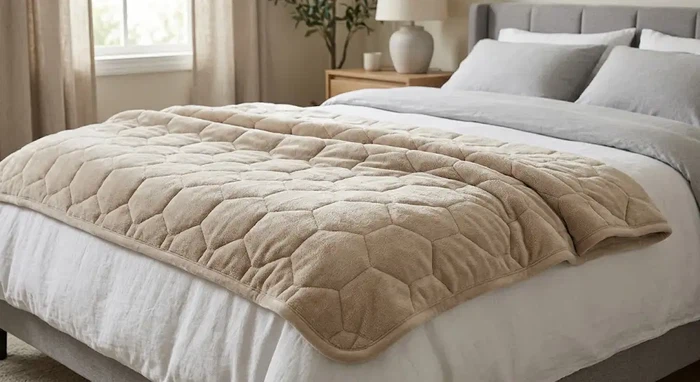
Why "Hand Feel" Shouldn't Be Your First Judgment
Softness Is a First Impression, Not Long-Term Proof
When you touch a heated blanket for the first time, what you feel is usually a combination of surface pile and finishing treatments applied during production. A plush, cloud-like hand can be engineered onto almost any base fabric with the right chemical softeners and brushing processes. That initial impression tells you very little about how the blanket will behave after six months on the bed or after the fifth wash cycle. Softness is a starting condition - not a guarantee of quality.
Durability Problems Usually Appear After Use and Washing
The real failure points of a heated blanket rarely show themselves on day one. They emerge gradually: the surface flattens where you sit every night, the color shifts after laundering, the edges begin to curl, the plush fibers mat down, and small pills appear along high-contact zones. These are the outcomes buyers care about months later, but none of them can be predicted by squeezing the product in a showroom.
A Blanket That Feels Soft on Day One May Not Look Good Later
What matters to most users is not the unboxing moment - it is whether the blanket still looks presentable and feels consistent after a winter of nightly use. A product that arrives plush but thins out, fades, or loses its shape quickly fails the only test that counts: sustained everyday quality.
4 Durability Indicators You Should Confirm Before Softness
Fabric Weight: The Base of Thickness, Body, and Long-Term Feel
Fabric weight, usually measured in grams per square meter (GSM), determines whether the blanket has enough body to feel substantial and to resist wear. A lower-GSM shell looks thin under light, drapes limply, and tends to show abrasion marks where the blanket rubs against sheets, skin, or the heating wires inside.
A properly chosen fabric weight does three things: it gives the blanket visual presence, it provides a buffer layer that protects the internal wiring structure, and it holds the plush surface upright for longer. When evaluating a product, it helps to look beyond the surface layer and consider the base material composition and weight that determine how the blanket ages. Users who prioritize a "premium feel" that lasts are really responding to weight more than to softness.
Color Fastness: Whether the Blanket Still Looks New After Washing
Color fastness refers to the fabric's resistance to fading, bleeding, or tone-shifting under washing, rubbing, and light exposure. It is one of the most visible indicators of product quality over time, and it matters especially for darker tones and for blankets that sit in a bedroom where aesthetics count.
Low color fastness produces several recognizable problems: colors wash out after only a few cycles, contact areas on the pillow or sheet start to look grey or chalky, and patterns lose definition. International textile standards such as those developed by the American Association of Textile Chemists and Colorists (AATCC) provide the technical framework for measuring these behaviors, and reputable manufacturers will test to those benchmarks. For a buyer, the practical signal is simpler: a blanket that still looks rich and uniform after ten washes is doing its job; one that fades or blotches is telling you the dyeing and finishing process cut corners.

Structural Stability: Whether It Keeps Its Shape Over Time
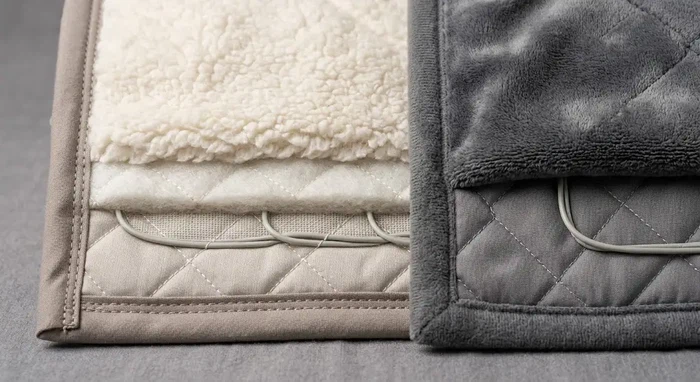
A heated blanket is not a single piece of fabric - it is a layered assembly of outer shell, inner filling or lining, heating wire channels, quilting or bonding, and reinforced seams or edge binding. Structural stability is what keeps all of those components aligned through folding, spreading, washing, and daily body weight.
When structural stability is weak, problems are easy to spot after a few weeks: the blanket develops rippling or rises into small humps where the layers separate, the wires shift position and create uneven heat, and the edges curl or pucker. Quilting patterns and bonding methods play a large role here, because they lock the inner structure to the outer fabric. A well-quilted blanket stays flat, drapes evenly, and resists deformation even after repeated laundering.

Wash Appearance Retention: How Well It Holds Up After Repeated Washing
Wash appearance retention is the most direct, user-level test of durability. It captures a cluster of related behaviors: does the blanket pill, does it shrink, does it wrinkle permanently, does the plush surface lie flat after drying, does the face of the fabric still look smooth?
Many heated blankets look excellent in their original packaging but reveal weaknesses as soon as they go through the wash. Fibers that were upright collapse and never recover, seams tighten and distort the rectangle, and the surface takes on a dulled, worn appearance. Before committing to a product - especially for volume buyers or OEM partners - it is worth reviewing how different fabric constructions compare in machine-wash performance, because this single factor separates products that age gracefully from those that look tired within a season.
Common Signs a Heated Blanket May Not Hold Up Well
You do not need lab equipment to spot a blanket with questionable long-term quality. The warning signs are usually visible to the naked eye, and noticing them early can save a purchase decision. Watch for these patterns:
- The surface feels soft at first but flattens or compresses quickly under normal weight.
- The color fades, dulls, or develops uneven patches after only a few washes.
- Edges curl upward or the overall shape becomes noticeably uneven after laundering.
- Small pills or fuzz balls appear on contact areas within the first few weeks of use.
- The blanket no longer looks smooth, full, or uniformly plush when spread across the bed.
Any one of these on its own may be tolerable; seeing two or more together usually signals that the base fabric, finishing, or construction was not built for sustained use.
The Right Priority Order: Durability First, Softness Second
When evaluating or developing a heated blanket, the sequence in which you confirm quality matters. Getting the order right prevents the common trap of falling in love with the hand feel and only later discovering structural weaknesses.
First: Material and Appearance Durability
Start with the foundation. Confirm fabric weight, color fastness, structural stability, and wash appearance retention. These four indicators determine whether the blanket will still look and feel like a quality product after real use. They also predict whether the product will generate complaints, returns, or negative reviews months after purchase. Reviewing overall blanket lifespan and maintenance expectations at this stage helps set realistic benchmarks.
Second: Functional Consistency
Once the material base is confirmed, check the functional layer. This includes heating consistency across the surface, wiring layout, temperature control stability, and post-wash electrical performance. A blanket that heats evenly when new but develops cold spots after two washes has a construction or wiring problem, not just a feature problem.
Third: Surface Comfort Optimization
Only after durability and function are verified should softness, plushness, and first-touch feel become the deciding factors. At this stage, hand feel becomes a differentiator between already-reliable products rather than a distraction that hides weaker fundamentals.
For durable heated blanket development, softness should be optimized after the product's material and structural reliability are confirmed.
Conclusion
A truly durable heated blanket is not the one that feels softest at first touch, but the one that keeps its shape, color, and appearance after repeated use and washing. When fabric weight, color fastness, structural stability, and wash appearance retention are confirmed first, softness becomes a final refinement rather than a disguise for missing quality.
FAQ
What makes a heated blanket durable?
Durability comes from four combined factors: sufficient fabric weight for body and protection, strong color fastness to resist fading, stable construction that holds its shape across wash cycles, and good wash appearance retention that prevents pilling, shrinkage, and surface flattening. Softness alone does not indicate durability.
Is softness a reliable sign of heated blanket quality?
No. Softness reflects surface treatment and short-term hand feel, but it does not predict how the blanket will age. Many products feel plush on day one and deteriorate quickly because their base fabric or structural layers were not built to last. Softness should be the last quality checkpoint, not the first.
Why does fabric weight matter in a heated blanket?
Fabric weight gives the blanket visual body, protects the heating wires from abrasion, and helps the plush surface stay upright over time. Blankets with too low a GSM tend to look thin, wear through faster at contact points, and lose their premium appearance within a few months.
How can you tell if a heated blanket will hold up after washing?
Look for products that specify wash-tested performance: stable dimensions after wash, minimal pilling on the surface, preserved color depth, and intact quilting or bonding. Reviewing how different fabric constructions behave in laundering is the most reliable indicator, since washing concentrates every weakness the product might have.
What makes a heated blanket look old quickly?
Three factors accelerate visible aging: poor color fastness that causes fading or blotching, weak structural stability that leads to rippling and curled edges, and low wash appearance retention that produces pilling and flattened pile. When any of these is present, the blanket looks worn long before the heating function has any problem.