
Heating Belt: Cut Risk, Speed Delivery, Lower TCO
Heating Belt: practical warmth with certified safety, predictable logistics, and scalable private-label options for retail buyers, EPC teams, distributors, and e-commerce sellers.

Heating Belt Introduction - Why it matters
If you manage sourcing for wellness, workplace safety, clinics, or online retail, a Heating Belt program must be safe, consistent, and scalable. This guide explains how belts work, which variants match each channel, what specifications and tests to request, and how to accept bulk shipments with confidence. Reading path: principles → types → features/specs → applications → selection → compliance → FAQ → conclusion & CTA.
Heating Belt Principles - How a Heating Belt works
Heating Belt Core components / mechanism
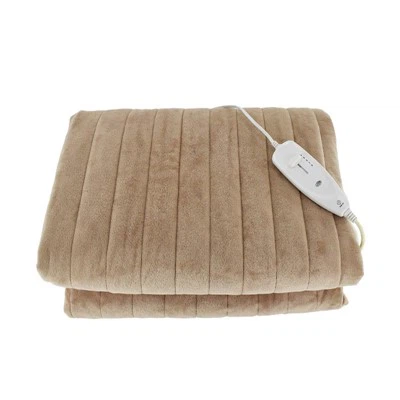
A Heating Belt converts electrical power into controlled heat inside a flexible wrap. The core is the heating element plus a closed-loop controller. PTC film elements raise resistance as temperature increases, so they inherently curb runaway heat-useful for abdominal comfort lines and rental programs. Nichrome wire traces and carbon-fiber fabrics give rapid warm-up and can be patterned to "steer" heat toward the lumbar area; they require stable sensing and firmware limits to avoid hot spots. Good layouts place the highest heat density at the middle of the belt and taper toward the edges to reduce edge scorching on thin garments.
The controller can be simple (3-step inline switch) or advanced (digital with microcontroller). A practical B2B baseline includes three heat levels, a 30–90 minute auto-off, and over-temperature protection (OTP). NTC thermistors are bonded close to the hottest region; if the sensor ever disconnects or reads outside range, firmware falls back to a safe state and cuts power via a relay or MOSFET. A non-resettable thermal fuse in series adds a last-resort safety layer.
For the human–device interface, a soft contact liner spreads pressure and reduces hot feeling at single points. The wrap/Velcro® strap should support at least 1,000 open/close cycles and hold alignment when the user bends or twists. Power choices matter: AC adapters enable higher wattage and richer UI; USB 5 V delivers portability for desk and travel; integrated batteries enable true cordless use but add certification and shipping constraints.
Heating Belt Key performance metrics & units
Wattage (W) determines the available thermal headroom. AC models sit around 25–45 W; battery and USB versions commonly range 8–20 W. More watts shorten warm-up but raise EMC, thermal, and material demands. Surface temperature (°C/°F) targets the perceived comfort band-40–60 °C works for most users, with 42–50 °C preferred on abdomen. Specify both the setpoint and the allowed tolerance at steady state.
Ramp-up time (min) is a user satisfaction driver. Aim for 2–5 minutes to reach a mid-level setpoint on a room-temperature dummy. Controllers often use PWM to push initial power and then taper to hold. Uniformity (ΔT) across the active zone should be ≤ ±3–5 °C; this requires a spreader layer (aluminum-coated film or conductive fabric) and a sensible trace pattern. Auto-off (min) reduces misuse risk and matches retailer policies; log timer deviation to ≤ ±10%. For EMC, keep conducted and radiated emissions at consumer Class B levels. If you claim ingress protection or washability, state the exact method (hand-wash cover only, or IPX splash) and reflect the limit in the IFU.
Heating Belt Common failure modes & misconceptions
Myth: "Higher watt is always better." Without robust sensing and firmware, higher wattage creates overshoot and hot edges. A better approach is "smart heat": adequate watts, strong spreader, tight ΔT, and predictable auto-off. Hot spots arise when the heating trace turns tightly or when a sensor sits too far from the peak zone. Ask for thermal maps at high and mid levels on 3–5 samples per lot.
Controller drift comes from untrimmed sensor tolerances and cheap regulators; require 24–48 h aging at alternating heat levels to expose drift and OTP nuisance trips. Adhesive and strap fatigue cause early returns, especially on belts used over thick clothes; specify seam strength, pilling resistance, and hook-and-loop cycle life. USB power myths lead to underheating complaints-publish a clear requirement (5 V/2 A or PD) and include a QC'd cable to avoid voltage drop. Finally, avoid conflating skin-contact products with industrial terms like "heat resistant conveyor belt"; procurement filters should explicitly separate these categories.
Heating Belt Types - Variants & naming

Heating Belt Type A: AC electric heating belt
Definition. Mains-powered belt with adapter and multi-level control, designed for home, clinic, and hospitality environments. Where it fits. It shines in long sessions where steady power and stronger heat are needed, such as physiotherapy warm-up, elder care comfort, and hotel/spa amenities. Pros. Strong heat ceiling, consistent output regardless of ambient conditions, and room for richer UI (bigger buttons, displays, memory). Cons. Tethered by cable, plug/voltage variants per region, and the adapter adds packaging volume.
Buyer notes. Specify adapter approvals, cable strain relief, and a controller lockout for clinic use. If the belt claims hand-washable covers, ensure the connector seals or quick-disconnects withstand repeated handling. For global SKUs, keep a universal 100–240 V adapter and pack regional plug inserts or separate SKUs to simplify retail operations.
Heating Belt Type B: USB portable heating belt
Definition. 5 V belt that pairs with power banks and laptops for desks and travel. Where it fits. Corporate perks, commuting kits, and e-commerce giftable bundles. Pros. Universal power, small carton, and low BOM for aggressive price points. Cons. Limited peak heat; output depends on the host source's current capability and cable quality.
Buyer notes. Publish the minimum source requirement (e.g., 5 V/2 A) on the box and IFU. Include a thick, low-resistance cable to reduce voltage drop. Tweak insulation and contact area to lift perceived warmth without raising absolute setpoint. If offering "PD-ready," make sure firmware negotiates correctly and falls back gracefully to 5 V sources.
Heating Belt Type C: Battery/rechargeable heated waist belt
Definition. Cordless belt with integrated or pouch battery and on-board control. Where it fits. Outdoor workers, logistics riders, construction crews, and events teams. Pros. True mobility and a premium experience that commands higher ASP. Cons. Additional certification, UN38.3 pack tests, and route constraints for air shipments; careful runtime claims are required.
Buyer notes. Size the pack for real-world runtime at mid level (often 2–4 hours). Offer a spare battery accessory. Ensure charger labeling and plug standards match regional rules. For enterprise rollouts, include a simple multi-bay charging dock and clear SOPs to prevent mixed chargers and degraded cells.
| Type | Use case | Pros | Cons | Typical specs |
|---|---|---|---|---|
| A AC belt | Home/clinic/hospitality | Strong heat; stable power; rich UI | Tethered; plug variants | 25–45 W; 40–60 °C; 60–90 min |
| B USB belt | Desk/travel/e-commerce | Portable; universal power; low BOM | Lower peak heat; cable losses | 8–12 W; 38–50 °C; 30–60 min |
| C Battery belt | Outdoor/mobile/field | Cordless; premium UX | Battery compliance cost/time | 10–20 W; 1.5–4 h |
Heating Belt Features & Specs - What to look for

Heating Belt Critical specs
Lock your PO around measurable specs. Define electrical input, temperature bands, uniformity, timing, and durability at the start to avoid change orders. For each critical line item, pair a method and a standard or SOP so your inspection team can verify it without guessing.
| Spec | Value | Test method | Standard |
|---|---|---|---|
| Input & Wattage | AC 100–240 V / 8–45 W; USB 5 V/2 A; battery 10–20 W | Power meter; load test (each level) | IEC/EN 60335-1; 60335-2-17 |
| Surface Temp | 40–60 °C adjustable; abdomen 42–50 °C | Thermocouple grid / IR map at 10 min | IEC/EN 60335-2-17 |
| Temp Uniformity (ΔT) | ≤ ±3–5 °C across active zone | Thermal imaging at steady state | Factory SOP (TBD) |
| Auto-off | 30 / 60 / 90 min; deviation ≤ ±10% | Functional timer test w/ stopwatch | Retail spec / IEC guidance |
| Over-temp protection | OTP < 75 °C internal + thermal fuse | Sensor fault injection; lockout check | IEC/EN 60335-1/-2-17 |
| Strap cycle life | ≥ 1,000 open/close cycles | Cycling fixture; peel/shear | Factory SOP (TBD) |
| Fabric abrasion | ≥ 10,000 Martindale rubs | ISO 12947 procedure | ISO 12947 |
| EMC (controller) | Class B pass | Chamber scan; cables attached | CE EMC 2014/30/EU; FCC Part 15B |
| Chemical safety | RoHS / REACH compliant | 3rd-party lab report | RoHS 2011/65/EU; REACH |
| Battery safety (if any) | UN38.3 / IEC 62133-2 | Pack + charger tests | UN/DOT; IEC 62133-2 |
| Washability / IP | Hand-wash cover or IPX splash | IPX splash; 5–10 wash cycles | IEC 60529 (if claimed) |
For USB and battery lines, add cable spec (AWG, length) and connector retention. For AC lines, specify plug type and adapter certifications per region. If you will market "massage heat belt" variants, reserve 10–15% power headroom for the motor and revalidate EMC with the motor running.
Heating Belt Quality controls & test methods
Quality is a process, not a one-off inspection. Write a short SOP pack that the factory can follow and your inspectors can audit. Include sampling plans, fixtures, and "go/no-go" criteria. Keep logs of lamination temperatures and controller outputs-drift in either is a strong predictor of returns. Insist on photos of thermistor placement and a trace map in the pre-production report; these two items correlate with most hot-spot issues.
| Stage | Sample size | What is checked | Pass criteria |
|---|---|---|---|
| IQC | AQL per lot | Element Ω, NTC value, wire pull, RoHS | Within tolerance; XRF pass |
| In-process | Hourly | Lamination temp logs; controller output | Logs complete; stable output |
| Aging | 100% pilot; AQL mass | 3-cycle heat test; OTP behavior | No drift; no nuisance trips |
| FQC | AQL | Ramp time; level accuracy; ΔT map | Meets spec; neat stitching |
| OBA/Pre-ship | Tight AQL | Random carton open; labels; IFU | 0 major; ≤ AQL minor |
Close the loop post-launch: tag RMAs by root cause (power, heat, strap, cosmetic) and feed the top two drivers back into the next PO spec. A 0.5–1.0 pp drop in returns often pays for tighter ΔT and better strap materials within one season.
Heating Belt Cost & TCO drivers
Element choice. PTC costs a little more but lowers burn risk and softens warranty exposure. Controller sophistication. Clear icons, tactile buttons, and accurate timers reduce misuse and "dead-on-arrival" perceptions. Materials. Wipeable liners and reinforced seams extend service life in clinics and rentals. Compliance. EMC, material safety, and battery tests add upfront cost but prevent customs holds and listing delays. Packaging density. Better trays and corner protection reduce breakage and freight per unit. Scale. Tooling and test plans amortize over volume; plan colorways late (art-only change) to keep cycle time short.
TCO example. At 80,000 AC units/year, PTC + tighter ΔT + unified IFU lowers returns from 3.2% → 1.0% and trims after-sales from $3.90 → $2.10 per unit (~$168k saved). ISTA packaging cuts damage from 0.6% → 0.25% (~$22k saved). BOM +$0.58/unit ($46.4k). Net ≈ $143.6k/year, plus better ratings and smoother inbound checks.
Heating Belt Applications - Where a Heating Belt fits

Heating Belt Retail health & wellness (consumer)
Position AC and USB belts near braces and topical creams. Use a simple comparison card: comfort band, timer, and washability. For menstrual and abdominal comfort, choose narrower 42–50 °C profiles with softer liners and gentler elastic. Add a pouch and cable as a bundle. Attach a QR code to a one-minute setup video to cut "won't heat" returns. Expect basket-size lift when the belt is cross-sold with back supports or massage balls.
Heating Belt Corporate & industrial (cold areas)
For docks, cold rooms, and night shifts, pick battery belts with 2–4 h runtime at the middle level. Provide two heat profiles: "boost" for the first 10 minutes and "hold" for sustained warmth. Issue a simple charging SOP and a shared charging bay; mixing random chargers shortens pack life. Track absenteeism and micro-breaks across four weeks-teams usually see 6–10% fewer cold-related delays in winter peaks.
Heating Belt Brewing & fermentation (non-skin)
Use a fermentation heating wrap belt with Velcro strap for carboys or small tanks. Pair it with a plug-in thermostat sensor taped to the vessel wall; set the band to 20–30 °C. Make "non-skin" explicit on the label and IFU to avoid misuse. In winter, expect batch failures to drop as temperature swings smooth out. Store belts dry; moisture wicks can creep under wraps in cold cellars if not aired.
Heating Belt E-commerce private-label bundles
Bundle USB belts with a pouch, cable, and gift note. Map each color to one region barcode and publish the power requirement on the PDP and box. Add a short FAQ to the PDP about power banks and expected warm-up. Packaging density matters on air lanes-slim trays and fold-flat boxes save fees. Clear IFUs and auto-off reduce negative reviews by ~0.4–0.8 pp.
Heating Belt Workplace wellness programs (office HQ)
Distribute USB belts as part of a wellness stipend. Emphasize correct use over clothing layers and safe durations. Provide cleaning wipes and a simple hygiene policy for shared belts. After 6–8 weeks, HR teams often report fewer discomfort tickets and higher opt-in for winter shifts.
Heating Belt Logistics & delivery riders
Riders need compact battery belts that fit under jackets and don't snag when mounting bikes. Include a spare pack or a fast-charge option. Use glove-friendly buttons and LEDs readable in daylight. Collect feedback on runtime in real routes; if many riders use "boost" frequently, raise pack capacity or adjust profile to reduce peaks.
Heating Belt Construction & public works (outdoor)
Issue belts as standard winter PPE add-ons. Choose durable covers and stronger straps; dust and grit will stress hook-and-loop. Keep the UI minimal: three heat levels, 60-minute auto-off, and a lock to prevent accidental presses under jackets. Evaluate productivity on freeze days versus baseline-look for fewer warm-up breaks and smoother task transitions.
Heating Belt Physiotherapy & rental clinics
Prefer AC belts with removable liners and a controller lock. Set fixed timers (e.g., 30/60 min) to match session lengths. Keep a small bin of spare covers and straps for fast turnaround. Add a QR to a cleaning video for staff rotation. Clinics usually see a 30–40% reduction in disposable heat-pack spend within a season.
Heating Belt Postpartum & maternity (comfort protocols)
Use narrow temperature bands and the softest liners available. Offer slightly wider belts for better abdominal contact with gentle elastic to avoid pressure points. Include a plain-language IFU with "first use" guidance (start at low, check comfort every 10 minutes). Hospitals prefer large, high-contrast buttons and long cords with strain relief.
Travel & commuting (USB)
Target 5 V belts with short, robust cables and strain relief at both ends. Explicitly state compatible power banks (≥ 10,000 mAh recommended). Provide a cable tie or pouch to keep the cord tidy on trains and planes. A short "what to expect" card reduces cold-start complaints (e.g., 2–3 minutes to feel warmth through winter layers).
Hospitality, spa & fitness add-ons
Use AC belts with wipeable liners and 60-minute timers for warm-up pre-classes or in relaxation lounges. Provide a quick sanitation routine and a rack for post-use airing. Upsell acceptance increases when front-desk staff demonstrate the single-button operation and show the auto-off.
Elder care & home health
Select models with large tactile controls, bright indicators, and simple temperature names (Low/Med/High). Provide a caregiver card that describes safe use, clothing layers, and maximum single-session durations. Keep cords longer with good strain relief to avoid trip hazards. Returns fall when the IFU includes large diagrams versus text-heavy pages.
Fleet drivers & long-haul cabs
Drivers benefit from spot warmth without high cab idling. Supply a regulated 12 V to 5 V/AC adapter tested for automotive noise. Put controls near the belt's left hip for easier access when seated. Publish a "cab-safe" guide and suggest use during mandatory rests to avoid distraction.
Field sales, booths & events
Battery belts keep staff comfortable at outdoor booths. Offer brand-printed wraps and a spare pack in each kit. Train staff to start at a mid level 10 minutes before shifts; this avoids frequent toggling that drains packs. Expect higher dwell time and smoother demos in shoulder seasons.
Safety stock & CSR winter kits
For NGOs and municipalities, pick simple USB or AC models with pictorial IFUs and minimal language load. Use neutral colors and plain packaging. Build a pallet plan with mixed sizes and a carton key on the outside. Complaint rates stay low when recipients can identify the right connector and heat level at a glance.
Heating Belt Selection Guide - How to choose

Decision matrix
| Requirement | Recommended type/spec | Rationale |
|---|---|---|
| Highest heat & features (home/clinic) | AC belt, 25–45 W, 3–6 levels, 60–90 min auto-off | Stable power, better UI, predictable sessions |
| Desk/travel | USB belt, 5 V/2 A, short low-resistance cable | Universal power, compact packaging |
| Outdoor/mobile | Battery belt, 10–20 W, real 2–4 h runtime | True cordless; fewer warm-up breaks |
| Sensitive skin/abdomen | PTC element; 42–50 °C; ΔT ≤ ±3 °C; soft liner | Gentle, even warmth with lower risk |
| Rental/clinic hygiene | Removable liner; IPX splash (if claimed) | Fast turnover; simpler cleaning |
| Multi-region retail | 100–240 V adapter; region plugs; multilingual IFU | Fewer listing delays; clear labeling |
| Value-add differentiation | Heated massage belt (motor+heat) | Higher ASP; clear positioning |
Acceptance checklist
Use this list at pre-shipment inspection to avoid surprises after landing:
- Model/part matches PO; unit/carton labels scannable and correct.
- Adapter rating and plug type per region; approvals printed and legible.
- IFU and safety warnings included; icons consistent with product UI.
- Surface temperature verified at 10 minutes on Low/Med/High; ΔT map within tolerance.
- Auto-off at each level measured; deviation ≤ ±10%; OTP/fuse verified via fault injection.
- Stitching straight; no skipped stitches; strap holds after 1,000 cycles on fixture.
- RoHS/REACH documents archived; EMC report available for controller.
- Battery paperwork (if any): UN38.3, charger labeling, and IATA markings present.
- ISTA drop/vibration passed; cartons undamaged; corner protection present.
- Random wash/splash test (if claimed) performed with no delamination.
- Spare parts (controllers/covers/straps) included at 1–2% for quick RMA.
Procurement basics. MOQ 500–1,000 (OEM), 100–300 (neutral). Lead time 25–35 days first PO; 15–25 days repeat; +7–10 days if batteries. Packaging: retail box + multilingual IFU or bulk eco-pack; outer carton shows PO/SKU/region code. QC path: IQC → in-process → aging → FQC → OBA. Warranty: 12 months on workmanship unless specified otherwise.
Compliance & Standards
- IEC/EN 60335-1 & 60335-2-17 (household/similar; heating pads/blankets)
- CE under LVD 2014/35/EU and EMC 2014/30/EU (EU)
- RoHS 2011/65/EU and REACH (materials)
- FCC Part 15B for controllers (U.S.)
- UL/NRTL path: confirm UL 130 or UL 499 (TBD)
- Battery models: UN38.3; IEC 62133-2; IATA shipping labels (TBD)
- Biocompatibility if making medical claims: ISO 10993 (TBD)
- IP claims (if any): IEC 60529; ensure IFU wording matches limitations
FAQ
Q1. Which element is safest?
PTC film self-limits heat and pairs well with OTP, giving forgiving behavior on abdomen and for rentals. Nichrome and carbon fabrics are great when the controller and spreader are well-designed and ΔT is verified on each lot.
Q2. Can USB match AC performance?
Not in peak output. USB is 5 V-limited and depends on the source and cable. To lift comfort, optimize insulation, contact area, and profile curves; publish a clear power requirement and include the right cable.
Q3. How to avoid hot-spot complaints?
Specify ΔT ≤ ±3–5 °C, inspect thermistor placement, require a trace map, and run IR snapshots in FQC. Upgrade liners if users wear thin shirts to improve perceived uniformity.
Q4. Does massage complicate compliance?
Yes-motors and switchers increase EMC sensitivity. Budget time for pre-compliance scans and route cables away from the sensor to reduce noise.
Q5. What timer tolerance is acceptable?
≤ ±10% at each level. Log three repeats per level and keep the worst case as the record. Pair with OTP/fuse validation to close the safety loop.
Q6. Any shipping advice for battery belts?
Secure UN38.3 and charger paperwork early. Use IATA-compliant labels and a pack insert that prevents terminals from shorting. Add 7–10 days to your first-PO schedule.
Q7. Are "heat resistant conveyor belt" specs relevant to us?
No. Those are industrial transport belts with different materials and standards. Keep sourcing language focused on skin-contact Heating Belt products.
Q8. How many spares should we hold?
Keep 1–2% controllers, covers, and straps. This reduces RMA cycle time and protects ratings while keeping warehouse complexity low.
Conclusion & CTA
Choose the right Heating Belt platform for each channel-AC for clinics and hospitality, USB for desks and travel, battery for mobile teams. Lock ΔT, timer, OTP/fuse, washability, and packaging in your PO, and attach the acceptance checklist to QC. Share your target temperature band, regions, and volume to receive AC/USB/battery samples, a standard test plan, and a pilot timeline.