
Which Heating Belt for Menstrual Cramps Works Best?
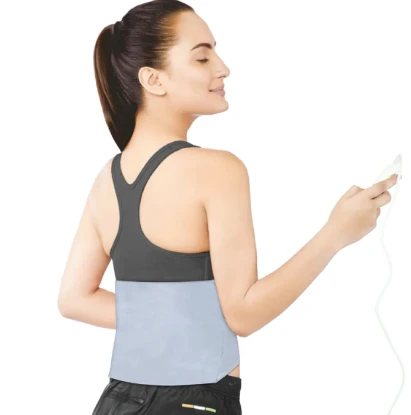
The best heating belt for menstrual cramps depends on your lifestyle and pain severity. Cordless models with 3-5 hour battery life work well for active users, while continuous-heat belts with replaceable power banks suit those with severe cramps needing all-day relief. Key features to prioritize include heating speed under 10 seconds, adjustable temperature settings, and thin profiles for discreet wear under clothing.
Understanding Why Heating Belts Relieve Menstrual Pain
Heat therapy addresses period pain through three physiological mechanisms. When applied to the lower abdomen, warmth increases blood circulation to the pelvic region, helping oxygen reach cramping muscles more efficiently. The improved blood flow counteracts the ischemia that occurs during uterine contractions.
The second mechanism involves direct muscle relaxation. Heat reduces the intensity of uterine muscle contractions by relaxing smooth muscle tissue. A 2018 meta-analysis published in Scientific Reports found that heat therapy provided pain relief comparable to over-the-counter NSAIDs, with participants reporting reduced pain scores by an average of 4.04 points on a 10-point visual analog scale.
Heat also works at the neural level. Warmth activates specific sensory receptors that compete with pain signals traveling to the brain, effectively blocking some pain perception through a process called the gate control theory. Studies show that 36.5% to 50% of women use heat as their primary method for managing dysmenorrhea, making it one of the most common non-pharmaceutical approaches.
Modern heating belts improve on traditional hot water bottles by maintaining consistent temperatures between 40-65°C and eliminating the need to stay stationary. Unlike hot water bottles that cool within 20-30 minutes, electric heating belts provide controlled warmth for 2-5 hours per charge.
Battery Life: Built-In vs. External Power Banks
Battery configuration significantly impacts usability. Built-in battery models typically last 2-3 hours per charge, while external power bank systems offer 3-5 hours or the ability to swap batteries for continuous use.
Built-in battery belts like the Slimpal and HOTBAG models feature integrated lithium polymer batteries ranging from 1800-2500mAh. These designs keep the belt streamlined and eliminate cable management. The Pixie Cup Stella Thermal stands out with a 5-hour battery life, notably longer than the typical 3-hour standard. This extended duration matters for users with heavy flow days or those who can't easily recharge during work or school.
External power bank systems, exemplified by the Pixie Cup Eva Thermal, use standard 5000mAh USB power banks. This approach offers practical advantages: when one battery depletes, you swap in a charged replacement rather than waiting for recharge time. The power banks also serve other purposes like charging phones, making them multipurpose accessories.
The trade-off involves convenience versus versatility. Built-in batteries mean one less item to carry but require the entire belt to be near a USB port during charging. External systems add a small cable connection but provide uninterrupted relief potential. For nurses, teachers, or others working long shifts, the external system often proves more practical despite the minor bulk of carrying spare batteries.
Heat Settings and Temperature Control
Temperature adjustability allows customization based on pain severity and personal heat tolerance. Most quality heating belts offer 3-4 temperature levels, typically ranging from 45°C to 65°C.
The Climsom belt demonstrates effective temperature progression: 45°C (blue light) for mild cramps, 55°C (green) for moderate pain, and 65°C (red) for severe cramping. As a safety feature, it automatically steps down from the highest setting to 55°C after 5 minutes to prevent overheating. This automatic adjustment addresses a common concern with traditional heating pads - the risk of burns from prolonged high-heat exposure.
Graphene heating technology, used in brands like Slimpal and Arinda, enables rapid heat-up times of 3-5 seconds. This near-instant warmth proves valuable when cramps hit suddenly. Earlier heating pad technologies required 30-60 seconds to reach therapeutic temperatures, a delay that feels considerably longer when experiencing acute pain.
Temperature sensors with NTC (Negative Temperature Coefficient) technology maintain consistent heat output. Without this regulation, battery-powered devices typically produce decreasing warmth as the charge depletes. The sensor adjusts power delivery to keep temperature stable throughout the 2-3 hour usage period.
Personal heat tolerance varies significantly. Some users find 45°C sufficient and comfortable for hours, while others need 60°C+ for noticeable relief. The ability to adjust prevents the common complaint with single-temperature solutions: either uncomfortably hot or insufficiently warm.
Vibration Features: Helpful or Hype?
Heating belts increasingly include vibration massage functions, typically with 3-4 intensity modes. The value proposition suggests vibration enhances muscle relaxation through mechanical stimulation, but real-world utility varies considerably.
Vibration therapy works through forced muscle contraction and relaxation cycles. When vibrations penetrate chronically tense muscles, they create rapid micro-movements that can reduce muscle guarding and improve tissue flexibility. Some users report that combining heat and vibration provides better relief than heat alone, particularly for lower back cramping.
However, vibration features introduce practical drawbacks. Multiple user reviews note that vibration motors generate noticeable noise, making discreet use in public or quiet office environments difficult. The Climsom brand deliberately omits vibration functionality, arguing that the added bulk, weight, and rigidity required for vibration motors compromises the belt's ability to conform to body curves.
The My OBI belt, which features both infrared heating and vibration, illustrates the dual-function approach. User testing revealed that the combination worked well at home but proved too conspicuous for workplace use due to audible buzzing. The ideal setting reported was high heat with medium vibration - a personalized combination that highlights why adjustability matters more than raw feature count.
For severe cramping, vibration may offer marginal additional benefit. For mild to moderate cramps, heat alone typically suffices. Consider vibration a secondary feature rather than a primary selection criterion, especially if discretion matters for your lifestyle.

Thickness and Discretion Under Clothing
Belt profile significantly affects wearability in public settings. The thinnest heating belts for menstrual cramps measure 0.4-0.8 inches thick, while standard designs range from 1.0-1.5 inches.
The Pixie Cup Eva Thermal markets itself as one of the thinnest heating belts available, specifically designed for discretion. Thickness becomes critical when worn under fitted clothing like dress pants, pencil skirts, or work uniforms. A bulky belt creates visible lines and bunching that draws attention - the opposite of what most users want during their period.
Belt width also impacts discretion. Wider belts (8+ inches) provide more coverage area but increase visibility. The Slimpal Plus-Sized model features 8.27-inch width, offering 90% abdominal coverage but requiring looser clothing to conceal effectively. Narrower belts (4-6 inches) target the lower abdomen specifically and hide more easily.
Material flexibility contributes to comfort and concealment. Soft, stretchable fabrics like the polyester blend used in the Bella Thermal mold to body contours without creating stiff edges. Rigid designs with less flexible heating elements maintain their shape, creating gaps that reduce heat transfer efficiency and increase visibility.
Weight considerations matter for all-day wear. Belts under 300 grams feel barely noticeable, while heavier models (400+ grams) can cause the belt to sag or require frequent repositioning. The My OBI belt advertises weighing less than an apple (approximately 180 grams), which testing confirmed allowed comfortable wear for 4+ hours without adjustment.
Testing discretion involves the "shirt tuck test": tuck a fitted shirt into pants while wearing the belt. If the belt creates visible bumps or prevents the shirt from lying flat, it's too bulky for professional settings.
Coverage Area: Abdomen, Back, or Both
Heating belts vary in their coverage design. Some focus exclusively on lower abdominal cramping, while adjustable models wrap to include lower back pain relief.
Lower back pain affects approximately 60% of women experiencing dysmenorrhea, according to menstrual health studies. This pain results from referred pain signals and shared nerve pathways between the uterus and lumbar region. Belts with wrap-around coverage or extended length allow positioning the heating element on the lower back while the belt secures around the waist.
The adjustable belt approach, used by brands like Climsom and Slimpal, features velcro or buckle closures that extend up to 45-54 inches. This accommodates different body sizes and allows repositioning for back placement. Some users alternate positions - starting with front coverage for cramping, then shifting to back coverage once abdominal pain subsides.
Dual-element belts place heating zones on both front and back simultaneously. While this sounds optimal, it requires larger battery capacity and increases cost substantially. Most users report that alternating single-zone coverage works adequately without the added expense.
The heating element's shape matters too. Rectangular elements provide broad coverage, while contoured designs follow the natural curve from lower abdomen to pelvis. The Bella Thermal uses a kidney-shaped heating element that wraps around the sides, distributing warmth more evenly than straight rectangular pads.
Consider your typical pain pattern. If cramps center in the lower abdomen, a 4x6 inch element positioned just above the pubic bone works well. If back pain dominates, prioritize belts with 6+ inch elements and long strap extensions that reach comfortably around to the lumbar region.
FSA and HSA Eligibility
Several heating belt brands qualify for Health Savings Account (HSA) or Flexible Spending Account (FSA) reimbursement, reducing effective cost by 20-35% depending on your tax bracket. Purchasing a heating belt for menstrual cramps through these accounts provides significant savings.
The Slimpal Plus-Sized and standard models explicitly advertise FSA/HSA eligibility, simplifying the reimbursement process. To qualify, medical devices must treat or mitigate a medical condition - which menstrual cramps (dysmenorrhea) satisfy under IRS guidelines. Some account administrators require a Letter of Medical Necessity from your healthcare provider, while others approve heating pads for menstrual use automatically.
FSA/HSA eligibility matters financially. A $50 heating belt purchased with FSA/HSA dollars costs effectively $33-40 after tax savings, depending on your tax bracket. Over a product's 2-3 year lifespan, this represents $10-17 in savings - equivalent to one month of over-the-counter pain medication.
Documentation requirements vary by plan administrator. Keep your receipt and product description showing it's specifically designed for menstrual pain relief. Generic heating pads meant for multiple uses sometimes face approval challenges, while products explicitly marketed for dysmenorrhea treatment typically approve without issue.
Some manufacturers provide downloadable FSA/HSA documentation on their websites, including ICD-10 diagnosis codes and product categorization letters. This preemptive documentation streamlines reimbursement requests.
Safety Features in Heating Belts for Menstrual Cramps
Automatic shutoff mechanisms prevent overheating and battery drain. Quality heating belts include 30-45 minute timers, while premium models offer customizable duration settings.
The Slimpal models feature 1, 2, or 3-hour timer options, allowing users to set appropriate duration based on their schedule. This flexibility beats fixed 30-minute shutoffs that interrupt relief cycles and require manual restart. The automatic shutoff also provides safety during sleep, though most manufacturers recommend removing belts before sleeping due to positional risks.
Overheating protection, implemented through temperature sensors and safety chips, prevents the belt from exceeding safe skin contact temperatures. Prolonged exposure to temperatures above 45°C can cause erythema ab igne - a skin condition resulting from chronic heat exposure. Quality belts limit maximum surface temperature to 60-65°C and incorporate automatic step-down features.
The Climsom belt exemplifies safety-first design: after 5 minutes at 65°C maximum temperature, it automatically reduces to 55°C even if you don't manually adjust it. This guards against thermal injury while maintaining therapeutic warmth. The belt also auto-shuts after 45 minutes regardless of which temperature setting you selected.
LED indicators show operating status and heat level. Simple single-button designs (like Climsom) offer intuitive control - press and hold to power on/off, quick tap to cycle temperatures. More complex interfaces with separate buttons for heat and vibration can cause confusion in practice, as some users report accidentally activating the wrong function.
Proper usage guidelines recommend checking skin condition every 20-30 minutes during first uses to establish your tolerance level. Never apply maximum heat to bare skin immediately - either use over clothing or start with lower settings.
Maintenance and Longevity
Heating belt lifespan typically ranges from 18-36 months with regular use, depending on battery quality and care practices. Proper maintenance extends the useful life of your heating belt for menstrual cramps.
Battery degradation represents the primary failure mode. Lithium polymer batteries lose capacity through charge cycles, typically retaining 80% capacity after 300-500 charge cycles. Using a belt 2-3 days per month translates to 24-36 cycles annually, suggesting 8-13 years until reaching 500 cycles. However, heat exposure accelerates battery degradation, realistically limiting lifespan to 2-3 years.
External power bank systems offer a longevity advantage. When the battery weakens, you replace only the $15-25 power bank rather than the entire $50-70 belt assembly. This modularity extends overall product life and reduces waste.
Fabric care impacts durability. Most heating belts feature removable heating elements, allowing hand-washing of the fabric exterior. Machine washing typically isn't recommended as it risks water damage to electrical components, even when the heating element is removed. The Arinda belt advertises washability, but user reports suggest limiting washing to minimize wire stress.
Velcro fasteners weaken over time, especially with frequent adjustment. After 12-18 months of regular use, velcro may not grip as securely, causing the belt to loosen during wear. Some manufacturers sell replacement straps, while others require whole belt replacement.
Storage practices affect longevity too. Store belts at 40-60% charge rather than fully charged or depleted. Extreme temperatures (below 0°C or above 40°C) during storage degrade battery chemistry faster. Rolling rather than folding the belt reduces wire stress at fold points.

Herbal Inserts: The Pixie Cup Difference
Some heating belts include optional herbal packs that release aromatherapy compounds when heated. The Pixie Cup Stella and Eva Thermal models feature these Chinese herb-based inserts.
The herbal packs contain a blend of traditional Chinese medicine herbs designed to promote muscle relaxation when exposed to heat. The compounds release a mild tea-like scent during use. User reports describe the aroma as pleasant and subtly calming, though opinions vary on whether the herbs provide physiological benefits beyond placebo effect.
The inserts also serve a practical purpose as thermal buffers. One user reported that the lowest heat setting felt too intense on bare skin, but adding the herbal pack between belt and skin created a comfortable temperature buffer. This allows using higher heat settings for therapeutic benefit without discomfort.
The packs require periodic replacement as repeated heating cycles gradually diminish aromatic release. Pixie Cup includes initial packs with purchase, with replacements available separately. The added cost and maintenance requirement makes this a premium feature rather than a necessity.
Scientific evidence for traditional Chinese medicine herbs in pain relief remains mixed. While some compounds show anti-inflammatory properties in laboratory studies, whether aromatherapy application provides meaningful benefit for menstrual cramps lacks robust clinical evidence. Consider herbal packs a comfort-enhancing extra rather than a therapeutic necessity.
Price-to-Value Assessment
Heating belts for menstrual cramps range from $30 budget models to $70+ premium options. Cost-effectiveness depends on usage frequency and feature requirements.
Budget tier ($30-40) belts typically offer 2-3 heat settings, 2-3 hour battery life, and basic vibration. Brands like Arinda and generic Amazon models occupy this space. These work adequately for mild to moderate cramps occurring 1-2 days per month. Expect 12-18 month lifespan with moderate use.
Mid-range models ($40-55) add faster heating (3-5 seconds), 4 heat/vibration levels, and 3-4 hour batteries. Slimpal and HOTBAG exemplify this tier. Features like FSA eligibility and improved build quality justify the cost increase for users needing relief 2-4 days monthly. Lifespan extends to 24-30 months.
Premium options ($55-70+) include the Pixie Cup line and My OBI belt. These differentiate through superior battery life (4-5 hours), ultra-thin profiles, or unique features like herbal packs. The value proposition targets users with severe dysmenorrhea requiring all-day relief or those prioritizing discretion in professional settings.
Cost comparison to alternatives provides perspective. Monthly ibuprofen/acetaminophen expenses of $8-12 total $96-144 annually. A $50 heating belt used for 2 years costs $25 annually - a 75% reduction while eliminating medication side effects. From this view, even premium models pay for themselves within the first year.
Warranty coverage varies. Pixie Cup offers a 100% happiness guarantee with refund/replacement options. Others provide standard 90-day to 1-year limited warranties. Extended warranty indicates manufacturer confidence in build quality.
Choosing the Right Heating Belt for Menstrual Cramps: A Decision Framework
Choose based on these priority factors ranked by your lifestyle:
For Active Professionals: Prioritize thin profile (under 0.8 inches), quiet operation (no vibration or silent motors), and 4+ hour battery life. The Pixie Cup Eva or Climsom belt suit this use case. Accept slightly higher cost for discretion and extended runtime.
For Home-Focused Users: Emphasize cost-effectiveness and comfort over discretion. Budget and mid-range options with built-in batteries work well. Vibration features provide added value when noise doesn't matter.
For Severe Cramps: Select maximum heat capability (60-65°C), external power bank systems for battery swapping, and wider coverage area (8+ inches). The Slimpal Plus-Sized model or Pixie Cup Stella offer appropriate specifications.
For Mild Cramps: Basic 3-heat level models under $40 suffice. Focus budget on battery life rather than feature count, as simpler designs often prove more reliable.
For Budget-Conscious Buyers: Calculate cost per use over expected lifespan. A $60 belt used 30 times annually for 2 years costs $1 per use. A $35 belt lasting 15 months equals $1.17 per use. Sometimes mid-range models deliver better value than the cheapest options.
Frequently Asked Questions
Can I sleep wearing a heating belt?
Most manufacturers advise against sleeping with heating belts for menstrual cramps due to positional risks and prolonged heat exposure concerns. If severe night cramps occur, use the belt for 20-30 minutes before bed with automatic shutoff enabled, then remove before sleeping.
How long does a heating belt take to relieve cramps?
Relief typically begins within 15-30 minutes as blood flow increases and muscles relax. Maximum benefit occurs at 45-60 minutes of continuous use. Individual response varies based on pain severity.
Are heating belts safe for teenagers?
Yes, heating belts provide safe, drug-free pain relief suitable for adolescents experiencing dysmenorrhea. Start with lower temperature settings to establish comfort levels. Parental supervision recommended for first uses.
Do heating belts work for endometriosis pain?
Heat provides symptomatic relief for endometriosis-related cramping, though it doesn't address the underlying condition. Users with endometriosis often require longer usage duration and higher heat settings than those with primary dysmenorrhea. Consult your gynecologist about comprehensive treatment approaches.
When to Consider Alternatives
Heating belts excel for mild to moderate menstrual cramps but have limitations. If cramping consistently rates above 7 on a 10-point pain scale despite using heat therapy, consult a healthcare provider. Severe dysmenorrhea may indicate endometriosis, adenomyosis, or fibroids requiring medical treatment beyond heat therapy.
TENS (Transcutaneous Electrical Nerve Stimulation) units offer an alternative approach using electrical pulses to interrupt pain signals. Some studies suggest TENS provides faster relief onset than heat, though both achieve similar pain reduction after 60 minutes. Combination devices featuring both heat and TENS cost $80-120 but provide more treatment options.
Traditional heating pads with electrical cords remain relevant for home use. They provide unlimited runtime without battery concerns and cost $15-30. The trade-off is immobility - you're tethered to an outlet. Consider keeping a corded pad at home and a cordless belt for work/school.
Some women find alternating heat and cold therapy (contrast therapy) more effective than heat alone. Ice reduces inflammation while heat relaxes muscles. If heat hasn't provided adequate relief, experiment with 10 minutes cold followed by 20 minutes heat.
The evidence base supports heating belts for menstrual cramps as effective pain management. A 2018 systematic review analyzing six randomized controlled trials found heat therapy reduced pain scores significantly compared to no treatment, with effects comparable to NSAIDs but without gastrointestinal side effects. The portability of modern heating belts eliminates the traditional barrier of needing to stay home with a hot water bottle, letting you maintain normal activities during your period.