
In the United States, the national average residential electricity rate is approximately 16 cents per kWh, though rates vary significantly across states. Most buyers make winter heating equipment choices based on incomplete information, leading to confusion about electricity costs. Even hotels, which need to provide substantial heating solutions, often overlook product energy consumption during procurement, resulting in winter energy bills that exceed actual budgets. After reading this article, we recommend reassessing your entire heating strategy based on your specific situation.
Why Is There a 10x Power Consumption Difference Between the Two?
Standard electric blankets typically operate at 60-100 watts, while ordinary space heaters run at 1500 watts. That's quite a significant difference, but in actual use, the warmth you experience might be similar-sometimes electric blankets even heat up faster.
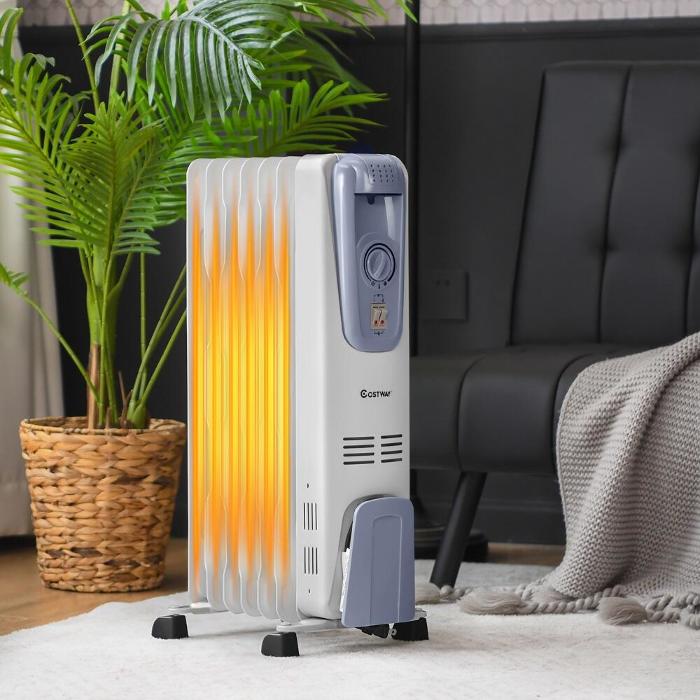
Space heaters work by heating air. Hot air rises, escapes through door and window gaps, and gets absorbed by cold walls. A 1500-watt heater running at full power consumes 1.5 kWh per hour. At the US average electricity rate of 16 cents/kWh, that's 24 cents per hour, and it must run continuously to maintain temperature-once it stops, the hot air gradually dissipates.
Electric blankets operate on a completely different principle. Regardless of how cold the room is, they only warm the area in contact with your body. The insulating properties of bedding materials far exceed those of air. Heat is trapped between you and the blanket, with almost no loss to the room. It's like the difference between using an insulated thermos versus an open cup for hot water.
According to our actual measurements from last winter, 60-75% of the heat generated by space heaters is wasted before you even feel warm-absorbed by environmental materials, lost through windows, or heating spaces you don't need at all. Conversely, electric blankets have much higher energy efficiency, warming only a small area with significantly better utilization.
Heating Method Comparison (Based on Thermodynamic Testing)
| Comparison Item | Space Heater | Electric Blanket |
|---|---|---|
| Heating Target | Air (indirect) | Human body (direct) |
| Effective Range | 150-200 sq ft | 20-30 sq ft bed area |
| Heat Retention Method | Convection circulation | Conduction + bedding insulation layer |
| Energy Loss Rate | 60-70% | 5-15% |
Actual Costs for a Single Bedroom Over 5 Winter Months (Based on Real User Tracking Data)
| Cost Type | Space Heater | Electric Blanket | Difference |
|---|---|---|---|
| Equipment Purchase | $60-120 | $30-80 | -$30 to $40 |
| Direct Electricity | $180-220 | $18-25 | $155-200 |
| Thermostat Chain Effect | $40-80 | $0 | $40-80 |
| Supporting Equipment (humidifier, etc.) | $30-50 | $0 | $30-50 |
| Electrical Inspection/Maintenance | $0-300 | $0 | $0-300 |
| Total | $310-770 | $48-105 | $262-665 |
The easiest cost to overlook: when you use a heater to raise the temperature in one room, other family members might feel colder in other rooms and turn up the whole-house thermostat. This is a classic case of "local optimization leading to worse overall results."
Electric blankets do the opposite-you can lower your bedroom thermostat by 10 degrees (from 68°F to 58°F), actually reducing the load on your whole-house heating system. This is a "negative cost" effect.
Which Should You Choose in Different Situations?
Simple conclusion first: For almost all home scenarios involving extended heating, electric blankets are more cost-effective. But there are a few exceptions.
Scenarios Where Space Heaters Are More Suitable
Bathroom preheating - Running a heater for 10 minutes before your morning shower in winter to warm the bathroom, then turning it off. For this type of short-duration, high-intensity heating, space heaters are the optimal choice.
Infant and toddler rooms - Because electric blankets are not recommended for young children due to safety concerns and overheating risks, but their rooms need to maintain a constant temperature of 68-72°F. In this situation, a low-power heater with temperature monitoring is essential. Following space heater safety tips workplace standards, maintain proper clearance from cribs and furniture.
Areas with particularly cheap electricity - If you're in certain parts of Oregon with cheap hydroelectric power, the cost disadvantage of heaters is cut in half. While electric blankets are still more economical, the gap isn't as significant.
5-Month Cost Comparison for Different Scenarios (Calculated Based on Actual Usage Patterns, Electricity Rate 16¢/kWh)
| Scenario | Description | Space Heater | Electric Blanket | Savings |
|---|---|---|---|---|
| Master Bedroom Sleep | 8 hours nightly | $180-220 | $18-25 | $155-200 |
| Living Room Movie Watching | 4 hours/day on weekends | $60-75 | $8-12 | $50-65 |
| Study/Office Work | Work from home 6 hours daily | $135-165 | $15-20 | $120-145 |
| Elderly Room | Seniors needing 24-hour warmth | $540-660 | $54-75 | $485-600 |
For homes with elderly residents requiring round-the-clock warmth, this requires particular caution as it involves both safety and comfort dimensions.
Space Heater Risks
Long-term exposure to direct hot air can cause excessive skin dryness, and elderly skin is already thinner and drier. A more hidden risk is that high-temperature environments can lower blood pressure, causing some elderly people to feel dizzy when standing up. For the elderly population, we recommend the best electric blanket for elderly users.
Safety Comparison: Common Accidents?
Space Heaters: Three Most Common Accidents
| Accident Cause | Percentage | Annual Incidents | Most Common Scenarios |
|---|---|---|---|
| Too close to combustibles | 53% | 835 | Near beds, curtains, closets |
| Unattended operation | 26% | 410 | Overnight sleep, forgot to turn off when leaving |
| Electrical failure | 12% | 189 | Old outlets, extension cord overload |
| Equipment malfunction | 9% | 142 | Poor quality, use beyond lifespan |
National Fire Protection Association data shows most space heater fires occur because equipment is less than 3 feet from curtains, bedding, clothing, or paper.
Electric Blankets: Three Common Accidents
Aging electric blankets causing internal wire brittleness or broken filaments leading to localized hot spots and smoldering
Folded use blocking heat dissipation and causing localized overheating
Wire or controller damage through misuse (extension cords, moisture, pet-chewed wires) causing overheating or short circuits
Electric blankets are low-power, body-contact heating devices, not high-temperature heat sources that bake surrounding combustibles. However, electric blankets aren't zero-risk-risks mainly come from product aging, incorrect usage, and wiring issues.

Electric Blanket Fire Safety Guide
When using an electric blanket, it is essential to understand fire safety guidelines in order to better assess the situation and take appropriate safety precautions.
If your impression of electric blankets is still stuck in the dangerous old product era, you need to update your knowledge. When considering are electric blankets safe, modern products are dramatically different from their predecessors.
Pre-2001 Electric Blankets Had Real Problems:
- No mandatory overheat protection
- High-voltage resistance wires (prone to short circuits)
- Crude controllers
- Mechanical switches easily stuck on high heat settings
- Wires prone to breaking when folded
These old models had fire rates comparable to space heaters.
But after the comprehensive upgrade of UL 964 standards in 2001, the situation completely changed.
Modern Electric Blanket Multi-Layer Safety Systems (Based on UL 964-2021 Standards)
| Safety Level | Mechanism | Trigger Condition | Response Time |
|---|---|---|---|
| 1. Overheat Sensing | Multi-point temperature monitoring | Any point exceeds 105°F | <30 seconds to power off |
| 2. Short Circuit Protection | GFCI-like circuitry | Detects abnormal current | <0.1 seconds to power off |
| 3. Auto Shutoff | Chip timer | Reaches set operating duration | 3-10 hours |
| 4. Physical Fuse | Thermal fuse | Temperature exceeds 130°F | Immediate |
For those seeking wholesale electric blankets for hospitality or commercial purposes, understanding these safety features and cost differentials is crucial for making informed procurement decisions that balance guest comfort, operational costs, and safety compliance.
FAQ
Q: Can people with pacemakers use electric blankets?
A: Modern electric blankets have very weak electromagnetic fields and generally do not affect pacemakers.
Important notes for heart patients: Avoid overheating that can cause blood vessel dilation and blood pressure drops. In high-temperature environments, dizziness may occur, with higher risks for heart patients. We recommend using low heat settings.
Q: Can electric blankets be left on all night while sleeping?
A: Modern electric blankets are designed with 3-10 hour automatic shutoff functions and can be used throughout the night. However, we recommend:
Turn on to preheat before sleep
Adjust to low setting or turn off when sleeping
Avoid prolonged use on high heat settings
Q: Are electric blankets still safe after washing? Will it affect the internal circuitry?
A: Most modern electric blankets are machine washable, but require:
Use gentle cycle with cold water
Avoid wringing; lay flat to dry
Only plug in after completely dry
Controller must be detached and never submerged in water
Check for any damage before first use after washing